
Sep 8, 2026pneumatic cylinder

How to Extend Pneumatic Cylinder Service Life

Learn practical ways to extend pneumatic cylinder service life through proper air preparation, pressure control, installation, and routine maintenance for industrial automation systems.
cd5c086c-59f9-4f6a-97c2-c2faf2d9351a
How to Extend Pneumatic Cylinder Service Life
Pneumatic cylinders are among the most widely used actuators in industrial automation. They are valued for their simple structure, fast response, and reliable performance in applications such as packaging, assembly, material handling, and production lines. Although pneumatic cylinders require relatively little maintenance, their service life depends greatly on operating conditions and routine care. A well-maintained cylinder can deliver consistent performance for millions of cycles, while poor maintenance may lead to air leakage, unstable movement, or unexpected downtime.
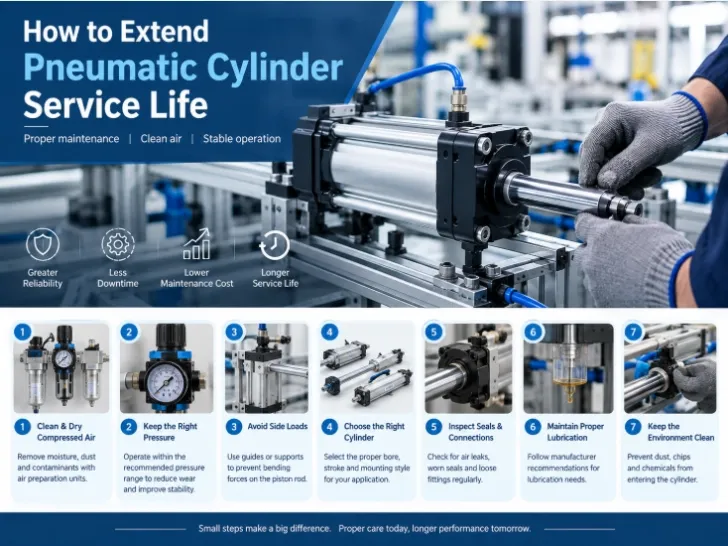
1. Use Clean and Dry Compressed Air
The quality of compressed air has the greatest impact on cylinder life. Moisture, dust, oil residue, and rust particles can damage internal seals and accelerate wear on the piston and cylinder tube.
Installing an air preparation unit, including a filter and pressure regulator, helps remove contaminants before air enters the cylinder. In humid environments, regular draining of the air filter is also essential to prevent water from entering the pneumatic system.
Clean air not only protects the cylinder but also improves the performance of solenoid valves and other pneumatic components.
2. Operate Within the Recommended Pressure Range
Applying excessive air pressure does not always improve performance. In fact, running a cylinder above its recommended working pressure increases the load on seals, piston rods, and end caps, which may shorten its service life.
Instead, adjust the pressure according to the actual force required by the application. A properly adjusted regulator provides stable pressure while reducing unnecessary air consumption and component stress.
3. Prevent Side Loads on the Piston Rod
A pneumatic cylinder is designed to generate linear motion. If external side loads or bending forces act on the piston rod, uneven wear may occur on the rod bearing and seals.
Whenever possible, use guide rods, linear guides, or external support mechanisms for applications involving heavy loads or offset forces. Proper alignment between the cylinder and the driven equipment also reduces mechanical stress and improves operating stability.
4. Select the Right Cylinder for the Job
Choosing the correct bore size, stroke length, and mounting style is just as important as proper maintenance.
An undersized cylinder may operate continuously at high pressure, while an oversized cylinder increases compressed air consumption and operating costs. Matching the cylinder specifications to the actual application improves efficiency and reduces unnecessary wear.
For high-speed automation, cylinders with built-in cushioning can also reduce impact at the end of each stroke and extend service life.
5. Inspect Seals and Connections Regularly
Small air leaks often develop gradually and may go unnoticed during daily production. Regular inspection of fittings, tubing, and cylinder seals helps identify problems before they become serious.
If the cylinder begins to move slowly, loses force, or produces unusual noise, inspect the sealing components immediately. Replacing worn seals at an early stage is usually much more economical than replacing the entire cylinder.
6. Maintain Proper Lubrication
Many modern pneumatic cylinders are designed for non-lubricated operation because they are pre-lubricated during manufacturing. However, if an application uses lubricated compressed air, the lubrication should remain consistent. Switching repeatedly between lubricated and non-lubricated air can reduce seal performance and accelerate wear.
Always follow the manufacturer's recommendations regarding lubrication requirements.
7. Keep the Working Environment Clean
Dust, metal chips, chemicals, and high humidity can affect cylinder performance over time. In harsh environments, protective rod boots or covers can help prevent contaminants from reaching the piston rod and seals.
Regular cleaning of the cylinder exterior also helps prevent dirt from entering moving parts during operation.
Conclusion
Extending the service life of a pneumatic cylinder does not require complicated maintenance procedures. In most cases, reliable performance comes from clean compressed air, correct operating pressure, proper installation, routine inspection, and selecting the right cylinder for the application.
For manufacturers and machine builders, preventive maintenance not only reduces unexpected downtime but also lowers replacement costs and improves overall production efficiency. By following these best practices, pneumatic cylinders can continue to operate smoothly and reliably throughout their designed service life.
Read next

Sep 8, 2026pneumatic cylinder

How to Extend Pneumatic Cylinder Service Life

Learn practical ways to extend pneumatic cylinder service life through proper air preparation, pressure control, installation, and routine maintenance for industrial automation systems.

cd5c086c-59f9-4f6a-97c2-c2faf2d9351a
How to Extend Pneumatic Cylinder Service Life
Pneumatic cylinders are among the most widely used actuators in industrial automation. They are valued for their simple structure, fast response, and reliable performance in applications such as packaging, assembly, material handling, and production lines. Although pneumatic cylinders require relatively little maintenance, their service life depends greatly on operating conditions and routine care. A well-maintained cylinder can deliver consistent performance for millions of cycles, while poor maintenance may lead to air leakage, unstable movement, or unexpected downtime.
1. Use Clean and Dry Compressed Air
The quality of compressed air has the greatest impact on cylinder life. Moisture, dust, oil residue, and rust particles can damage internal seals and accelerate wear on the piston and cylinder tube.
Installing an air preparation unit, including a filter and pressure regulator, helps remove contaminants before air enters the cylinder. In humid environments, regular draining of the air filter is also essential to prevent water from entering the pneumatic system.
Clean air not only protects the cylinder but also improves the performance of solenoid valves and other pneumatic components.
2. Operate Within the Recommended Pressure Range
Applying excessive air pressure does not always improve performance. In fact, running a cylinder above its recommended working pressure increases the load on seals, piston rods, and end caps, which may shorten its service life.
Instead, adjust the pressure according to the actual force required by the application. A properly adjusted regulator provides stable pressure while reducing unnecessary air consumption and component stress.
3. Prevent Side Loads on the Piston Rod
A pneumatic cylinder is designed to generate linear motion. If external side loads or bending forces act on the piston rod, uneven wear may occur on the rod bearing and seals.
Whenever possible, use guide rods, linear guides, or external support mechanisms for applications involving heavy loads or offset forces. Proper alignment between the cylinder and the driven equipment also reduces mechanical stress and improves operating stability.
4. Select the Right Cylinder for the Job
Choosing the correct bore size, stroke length, and mounting style is just as important as proper maintenance.
An undersized cylinder may operate continuously at high pressure, while an oversized cylinder increases compressed air consumption and operating costs. Matching the cylinder specifications to the actual application improves efficiency and reduces unnecessary wear.
For high-speed automation, cylinders with built-in cushioning can also reduce impact at the end of each stroke and extend service life.
5. Inspect Seals and Connections Regularly
Small air leaks often develop gradually and may go unnoticed during daily production. Regular inspection of fittings, tubing, and cylinder seals helps identify problems before they become serious.
If the cylinder begins to move slowly, loses force, or produces unusual noise, inspect the sealing components immediately. Replacing worn seals at an early stage is usually much more economical than replacing the entire cylinder.
6. Maintain Proper Lubrication
Many modern pneumatic cylinders are designed for non-lubricated operation because they are pre-lubricated during manufacturing. However, if an application uses lubricated compressed air, the lubrication should remain consistent. Switching repeatedly between lubricated and non-lubricated air can reduce seal performance and accelerate wear.
Always follow the manufacturer's recommendations regarding lubrication requirements.
7. Keep the Working Environment Clean
Dust, metal chips, chemicals, and high humidity can affect cylinder performance over time. In harsh environments, protective rod boots or covers can help prevent contaminants from reaching the piston rod and seals.
Regular cleaning of the cylinder exterior also helps prevent dirt from entering moving parts during operation.
Conclusion
Extending the service life of a pneumatic cylinder does not require complicated maintenance procedures. In most cases, reliable performance comes from clean compressed air, correct operating pressure, proper installation, routine inspection, and selecting the right cylinder for the application.
For manufacturers and machine builders, preventive maintenance not only reduces unexpected downtime but also lowers replacement costs and improves overall production efficiency. By following these best practices, pneumatic cylinders can continue to operate smoothly and reliably throughout their designed service life.

Sep 8, 2026pneumatic cylinder

How to Extend Pneumatic Cylinder Service Life

Learn practical ways to extend pneumatic cylinder service life through proper air preparation, pressure control, installation, and routine maintenance for industrial automation systems.

cd5c086c-59f9-4f6a-97c2-c2faf2d9351a
How to Extend Pneumatic Cylinder Service Life
Pneumatic cylinders are among the most widely used actuators in industrial automation. They are valued for their simple structure, fast response, and reliable performance in applications such as packaging, assembly, material handling, and production lines. Although pneumatic cylinders require relatively little maintenance, their service life depends greatly on operating conditions and routine care. A well-maintained cylinder can deliver consistent performance for millions of cycles, while poor maintenance may lead to air leakage, unstable movement, or unexpected downtime.
1. Use Clean and Dry Compressed Air
The quality of compressed air has the greatest impact on cylinder life. Moisture, dust, oil residue, and rust particles can damage internal seals and accelerate wear on the piston and cylinder tube.
Installing an air preparation unit, including a filter and pressure regulator, helps remove contaminants before air enters the cylinder. In humid environments, regular draining of the air filter is also essential to prevent water from entering the pneumatic system.
Clean air not only protects the cylinder but also improves the performance of solenoid valves and other pneumatic components.
2. Operate Within the Recommended Pressure Range
Applying excessive air pressure does not always improve performance. In fact, running a cylinder above its recommended working pressure increases the load on seals, piston rods, and end caps, which may shorten its service life.
Instead, adjust the pressure according to the actual force required by the application. A properly adjusted regulator provides stable pressure while reducing unnecessary air consumption and component stress.
3. Prevent Side Loads on the Piston Rod
A pneumatic cylinder is designed to generate linear motion. If external side loads or bending forces act on the piston rod, uneven wear may occur on the rod bearing and seals.
Whenever possible, use guide rods, linear guides, or external support mechanisms for applications involving heavy loads or offset forces. Proper alignment between the cylinder and the driven equipment also reduces mechanical stress and improves operating stability.
4. Select the Right Cylinder for the Job
Choosing the correct bore size, stroke length, and mounting style is just as important as proper maintenance.
An undersized cylinder may operate continuously at high pressure, while an oversized cylinder increases compressed air consumption and operating costs. Matching the cylinder specifications to the actual application improves efficiency and reduces unnecessary wear.
For high-speed automation, cylinders with built-in cushioning can also reduce impact at the end of each stroke and extend service life.
5. Inspect Seals and Connections Regularly
Small air leaks often develop gradually and may go unnoticed during daily production. Regular inspection of fittings, tubing, and cylinder seals helps identify problems before they become serious.
If the cylinder begins to move slowly, loses force, or produces unusual noise, inspect the sealing components immediately. Replacing worn seals at an early stage is usually much more economical than replacing the entire cylinder.
6. Maintain Proper Lubrication
Many modern pneumatic cylinders are designed for non-lubricated operation because they are pre-lubricated during manufacturing. However, if an application uses lubricated compressed air, the lubrication should remain consistent. Switching repeatedly between lubricated and non-lubricated air can reduce seal performance and accelerate wear.
Always follow the manufacturer's recommendations regarding lubrication requirements.
7. Keep the Working Environment Clean
Dust, metal chips, chemicals, and high humidity can affect cylinder performance over time. In harsh environments, protective rod boots or covers can help prevent contaminants from reaching the piston rod and seals.
Regular cleaning of the cylinder exterior also helps prevent dirt from entering moving parts during operation.
Conclusion
Extending the service life of a pneumatic cylinder does not require complicated maintenance procedures. In most cases, reliable performance comes from clean compressed air, correct operating pressure, proper installation, routine inspection, and selecting the right cylinder for the application.
For manufacturers and machine builders, preventive maintenance not only reduces unexpected downtime but also lowers replacement costs and improves overall production efficiency. By following these best practices, pneumatic cylinders can continue to operate smoothly and reliably throughout their designed service life.


Recommended articles

Guides visitors may want next

Helpful guides, field notes, and stories for choosing with more context.