Sep 13, 2026pneumatic cylinder
Alternative Supplier: A Practical Procurement Guide for Industrial Buyers
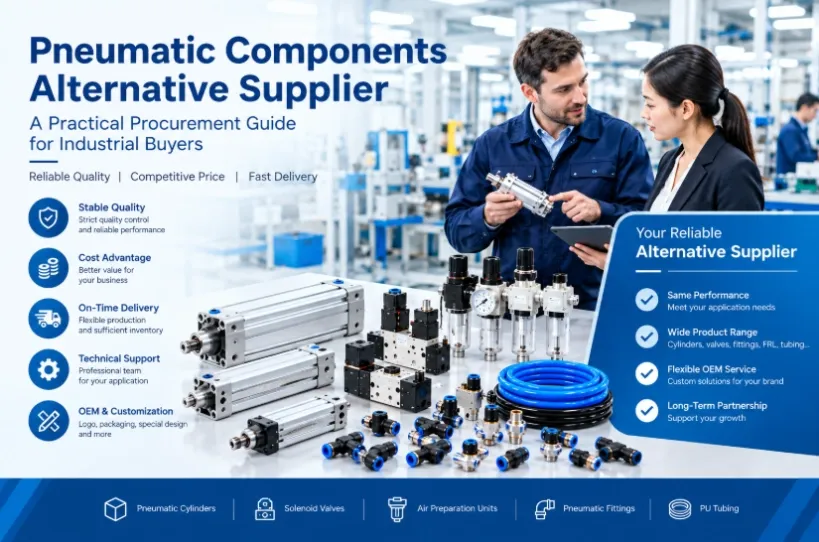
Choosing a reliable alternative supplier strengthens supply chain stability and reduces procurement risks.
Alternative Supplier: A Practical Procurement Guide for Industrial Buyers
In today's competitive manufacturing environment, purchasing decisions are no longer based solely on price. Industrial buyers are looking for suppliers that can provide stable quality, dependable delivery, technical support, and long-term cooperation. As global supply chains continue to evolve, many manufacturers and distributors are expanding their supplier networks by working with qualified alternative suppliers. This approach not only reduces supply risks but also creates greater flexibility and cost efficiency.
Why Consider an Alternative Supplier?
Relying on a single supplier can create challenges when lead times increase, production capacity becomes limited, or market demand changes unexpectedly. A qualified alternative supplier helps businesses maintain continuous production while providing additional sourcing options.
For OEM manufacturers, machine builders, and industrial distributors, having multiple reliable supply channels improves purchasing flexibility and reduces operational risks.
Evaluate Manufacturing Capability
A reliable supplier should have strong manufacturing capabilities supported by stable production processes. Before placing an order, buyers should understand how products are manufactured and inspected.
Important questions include:
- Does the factory perform 100% quality inspections before shipment?
- Are raw materials carefully selected and tested?
- Can the supplier maintain consistent product quality across different production batches?
- Are production records traceable?
A manufacturer with well-established quality control procedures is more likely to provide consistent products for long-term cooperation.
Technical Support Matters
Industrial pneumatic products are often selected based on specific application requirements. A professional supplier should be able to assist customers in choosing suitable products rather than simply offering standard catalog items.
For example, they should help customers select the correct cylinder bore size, recommend appropriate pneumatic fittings, choose compatible solenoid valves, or design complete air preparation solutions. Fast technical support reduces engineering time and minimizes installation errors.
Product Quality Should Be the Priority
The lowest purchasing cost is not always the lowest operating cost. High-quality pneumatic components generally offer better sealing performance, longer service life, and greater reliability.
When evaluating suppliers, buyers should pay attention to:
- Precision machining
- Durable sealing materials
- Stable dimensional tolerances
- Reliable surface treatment
- Pressure and leakage testing
Products that perform consistently help reduce maintenance costs and improve equipment uptime.
Delivery Performance Is Equally Important
Timely delivery plays a critical role in manufacturing. Even high-quality products lose value if they cannot be delivered when needed.
Buyers should ask suppliers about:
- Standard production lead time
- Inventory for common models
- Emergency order capability
- Export experience
- Packaging standards
Suppliers with efficient production planning and inventory management can better support long-term purchasing programs.
Value-Added OEM Services
Many industrial customers require customized products or private-label solutions. An experienced alternative supplier should offer flexible OEM services, including custom logos, packaging, product labeling, and special specifications.
Working directly with an OEM manufacturer also improves communication, shortens development cycles, and allows products to better match specific market requirements.
Build a Long-Term Partnership
Successful procurement is built on trust and continuous cooperation rather than one-time transactions. Buyers should look for suppliers that communicate openly, respond quickly, and continuously improve their products and services.
A reliable alternative supplier becomes an extension of the customer's supply chain, supporting business growth through consistent quality, dependable delivery, and responsive technical assistance.
Conclusion
Selecting the right alternative supplier requires careful evaluation of manufacturing capability, product quality, technical support, delivery performance, and OEM flexibility. The best supplier is not necessarily the one offering the lowest price, but the one providing the greatest long-term value.
For companies purchasing pneumatic cylinders, solenoid valves, air preparation units, pneumatic fittings, or PU tubing, partnering with a professional alternative supplier can improve supply chain stability, reduce procurement costs, and strengthen competitiveness in today's global industrial market.