
Sep 12, 2026pneumatic fittings

OEM Pneumatic Components Supplier: A Practical Procurement Guide for Industrial Buyers

Discover key factors including quality control, engineering support, delivery performance, and long-term purchasing strategies for industrial automation.
c8aada40-9fa4-45ee-8862-839ab4b078f4
OEM Pneumatic Components Supplier: A Practical Procurement Guide for Industrial Buyers
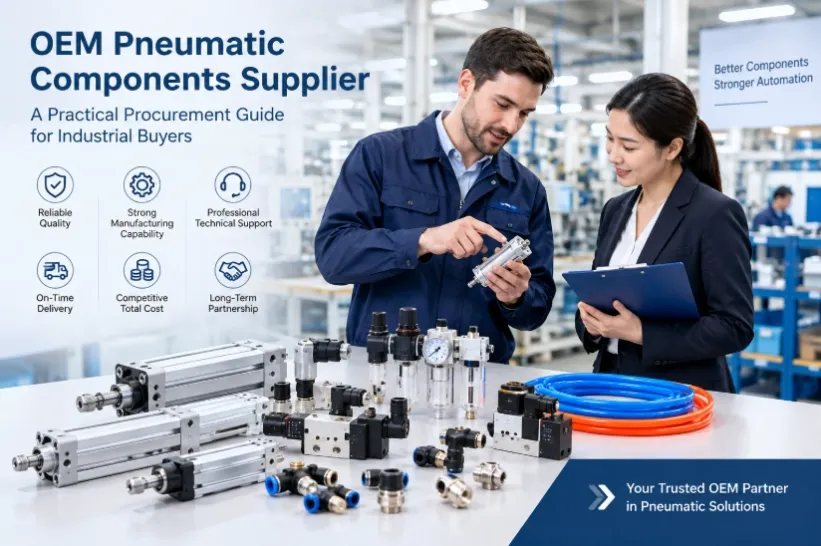
Finding the right OEM pneumatic components supplier is about much more than comparing prices. For manufacturers, distributors, and automation equipment builders, the supplier you choose can directly affect product quality, production efficiency, delivery performance, and long-term business success. A reliable OEM partner should not only manufacture pneumatic components but also understand your technical requirements and support your business as it grows.

Define Your Product Requirements

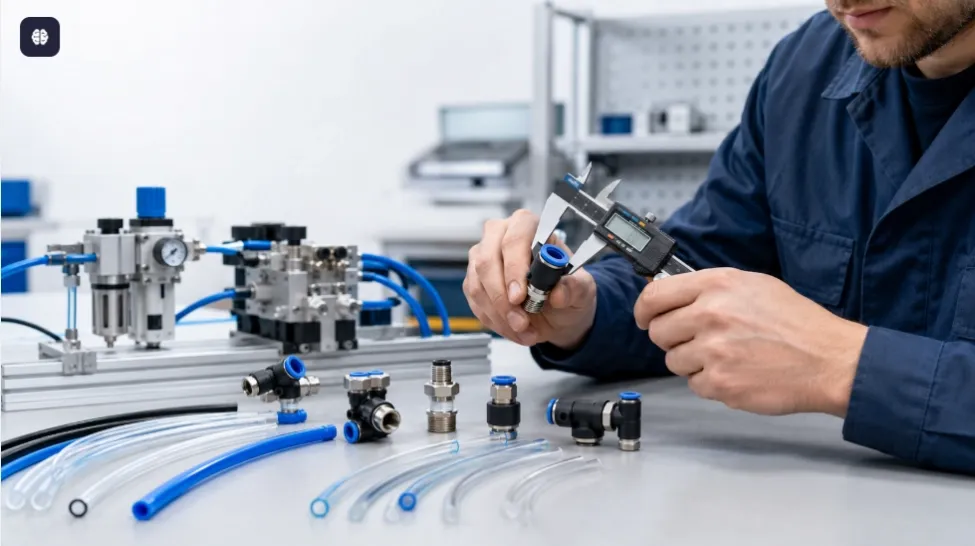
Before contacting suppliers, prepare a clear list of the products you need. This should include specifications such as cylinder bore size and stroke, fitting thread standards (PT, NPT, or G), operating pressure, valve voltage, tubing size, and material requirements. Providing complete technical information helps suppliers recommend suitable products and reduces the risk of mistakes during production.
If your project requires custom branding or non-standard designs, explain these requirements from the beginning. A professional OEM supplier should be able to offer logo printing, customized packaging, special materials, or modified dimensions based on your application.

Evaluate Manufacturing Capabilities

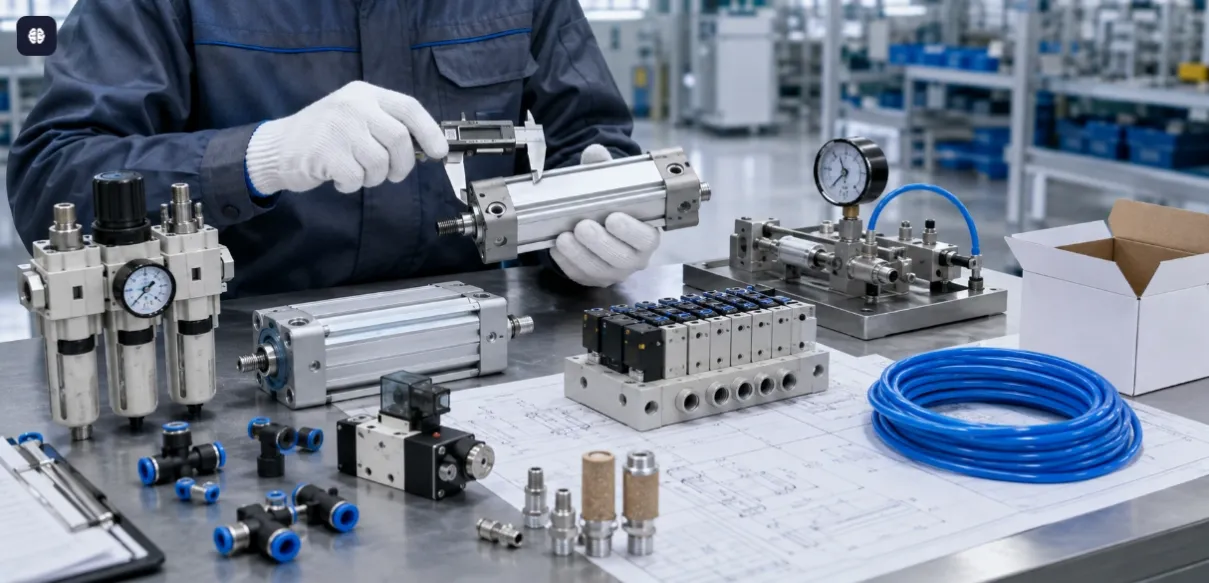
A trustworthy supplier should have stable manufacturing processes and effective quality control. Instead of asking only about production capacity, request information about their inspection procedures, testing equipment, and manufacturing experience.
Questions worth asking include:
  • Are pressure and leakage tests performed before shipment?
  • Are raw materials inspected before production?
  • Can the supplier provide dimensional inspection reports?
  • Are products tested for cycle life and durability?
  • Can production be traced through batch numbers?
Suppliers with consistent quality management are more likely to deliver reliable products over the long term.

Focus on Product Consistency

Industrial buyers often place repeat orders over many years. Product consistency is therefore just as important as initial quality. Even small differences in dimensions or materials can create installation problems or increase maintenance costs.
Ask whether the supplier maintains stable production standards, uses the same material specifications for each batch, and has procedures to control dimensional tolerances. Consistent products reduce warranty claims and improve customer satisfaction.

Assess Engineering Support

An experienced OEM supplier should do more than manufacture parts. They should also provide technical support during product selection and application.
For example, they should be able to recommend the correct cylinder size, help match pneumatic fittings with tubing, suggest suitable air preparation units, or advise on valve selection for different automation systems. Fast technical responses can save valuable engineering time during machine development.

Consider Delivery Performance

Reliable delivery is essential for maintaining production schedules. Ask suppliers about their standard lead times, inventory management, and production planning. A supplier with flexible production and sufficient stock of common models can respond more quickly to urgent orders.
For long-term cooperation, discuss annual purchasing plans or forecast schedules. This allows the supplier to prepare materials in advance and improve delivery reliability.

Compare Total Cost, Not Just Unit Price

The lowest quotation does not always represent the best value. Buyers should also consider product quality, service life, packaging quality, after-sales support, and logistics efficiency.
A slightly higher-quality pneumatic cylinder or fitting may reduce machine downtime, maintenance costs, and replacement frequency, resulting in lower overall operating costs.

Build a Long-Term Partnership

The best OEM suppliers work as business partners rather than simple manufacturers. Open communication, stable quality, competitive pricing, and continuous technical support create lasting cooperation that benefits both sides.
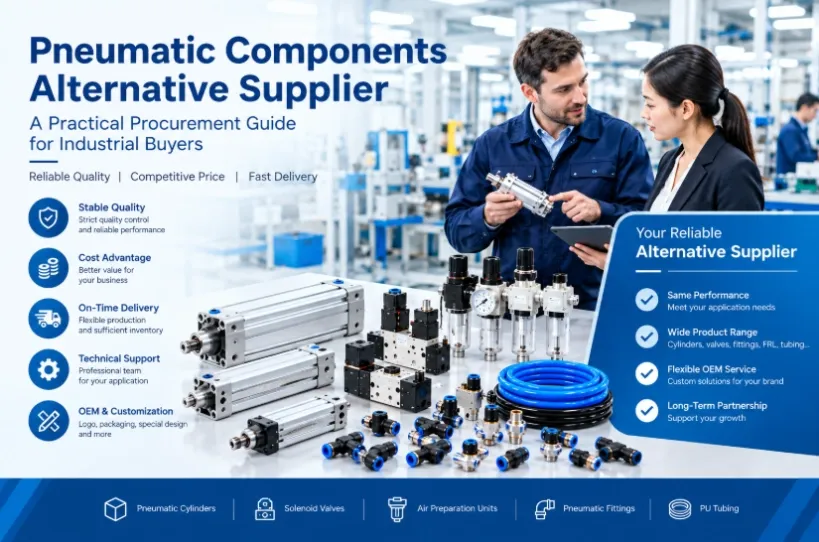
Whether you purchase pneumatic cylinders, solenoid valves, air preparation units, pneumatic fittings, or PU tubing, selecting an experienced OEM supplier helps ensure reliable products, smoother production, and stronger competitiveness in your market.
Read next

Sep 12, 2026pneumatic fittings

OEM Pneumatic Components Supplier: A Practical Procurement Guide for Industrial Buyers

Discover key factors including quality control, engineering support, delivery performance, and long-term purchasing strategies for industrial automation.

c8aada40-9fa4-45ee-8862-839ab4b078f4
OEM Pneumatic Components Supplier: A Practical Procurement Guide for Industrial Buyers
Finding the right OEM pneumatic components supplier is about much more than comparing prices. For manufacturers, distributors, and automation equipment builders, the supplier you choose can directly affect product quality, production efficiency, delivery performance, and long-term business success. A reliable OEM partner should not only manufacture pneumatic components but also understand your technical requirements and support your business as it grows.

Define Your Product Requirements

Before contacting suppliers, prepare a clear list of the products you need. This should include specifications such as cylinder bore size and stroke, fitting thread standards (PT, NPT, or G), operating pressure, valve voltage, tubing size, and material requirements. Providing complete technical information helps suppliers recommend suitable products and reduces the risk of mistakes during production.
If your project requires custom branding or non-standard designs, explain these requirements from the beginning. A professional OEM supplier should be able to offer logo printing, customized packaging, special materials, or modified dimensions based on your application.

Evaluate Manufacturing Capabilities

A trustworthy supplier should have stable manufacturing processes and effective quality control. Instead of asking only about production capacity, request information about their inspection procedures, testing equipment, and manufacturing experience.
Questions worth asking include:
  • Are pressure and leakage tests performed before shipment?
  • Are raw materials inspected before production?
  • Can the supplier provide dimensional inspection reports?
  • Are products tested for cycle life and durability?
  • Can production be traced through batch numbers?
Suppliers with consistent quality management are more likely to deliver reliable products over the long term.

Focus on Product Consistency

Industrial buyers often place repeat orders over many years. Product consistency is therefore just as important as initial quality. Even small differences in dimensions or materials can create installation problems or increase maintenance costs.
Ask whether the supplier maintains stable production standards, uses the same material specifications for each batch, and has procedures to control dimensional tolerances. Consistent products reduce warranty claims and improve customer satisfaction.

Assess Engineering Support

An experienced OEM supplier should do more than manufacture parts. They should also provide technical support during product selection and application.
For example, they should be able to recommend the correct cylinder size, help match pneumatic fittings with tubing, suggest suitable air preparation units, or advise on valve selection for different automation systems. Fast technical responses can save valuable engineering time during machine development.

Consider Delivery Performance

Reliable delivery is essential for maintaining production schedules. Ask suppliers about their standard lead times, inventory management, and production planning. A supplier with flexible production and sufficient stock of common models can respond more quickly to urgent orders.
For long-term cooperation, discuss annual purchasing plans or forecast schedules. This allows the supplier to prepare materials in advance and improve delivery reliability.

Compare Total Cost, Not Just Unit Price

The lowest quotation does not always represent the best value. Buyers should also consider product quality, service life, packaging quality, after-sales support, and logistics efficiency.
A slightly higher-quality pneumatic cylinder or fitting may reduce machine downtime, maintenance costs, and replacement frequency, resulting in lower overall operating costs.

Build a Long-Term Partnership

The best OEM suppliers work as business partners rather than simple manufacturers. Open communication, stable quality, competitive pricing, and continuous technical support create lasting cooperation that benefits both sides.
Whether you purchase pneumatic cylinders, solenoid valves, air preparation units, pneumatic fittings, or PU tubing, selecting an experienced OEM supplier helps ensure reliable products, smoother production, and stronger competitiveness in your market.
Sep 12, 2026pneumatic fittings

OEM Pneumatic Components Supplier: A Practical Procurement Guide for Industrial Buyers

Discover key factors including quality control, engineering support, delivery performance, and long-term purchasing strategies for industrial automation.

c8aada40-9fa4-45ee-8862-839ab4b078f4
OEM Pneumatic Components Supplier: A Practical Procurement Guide for Industrial Buyers
Finding the right OEM pneumatic components supplier is about much more than comparing prices. For manufacturers, distributors, and automation equipment builders, the supplier you choose can directly affect product quality, production efficiency, delivery performance, and long-term business success. A reliable OEM partner should not only manufacture pneumatic components but also understand your technical requirements and support your business as it grows.

Define Your Product Requirements

Before contacting suppliers, prepare a clear list of the products you need. This should include specifications such as cylinder bore size and stroke, fitting thread standards (PT, NPT, or G), operating pressure, valve voltage, tubing size, and material requirements. Providing complete technical information helps suppliers recommend suitable products and reduces the risk of mistakes during production.
If your project requires custom branding or non-standard designs, explain these requirements from the beginning. A professional OEM supplier should be able to offer logo printing, customized packaging, special materials, or modified dimensions based on your application.

Evaluate Manufacturing Capabilities

A trustworthy supplier should have stable manufacturing processes and effective quality control. Instead of asking only about production capacity, request information about their inspection procedures, testing equipment, and manufacturing experience.
Questions worth asking include:
  • Are pressure and leakage tests performed before shipment?
  • Are raw materials inspected before production?
  • Can the supplier provide dimensional inspection reports?
  • Are products tested for cycle life and durability?
  • Can production be traced through batch numbers?
Suppliers with consistent quality management are more likely to deliver reliable products over the long term.

Focus on Product Consistency

Industrial buyers often place repeat orders over many years. Product consistency is therefore just as important as initial quality. Even small differences in dimensions or materials can create installation problems or increase maintenance costs.
Ask whether the supplier maintains stable production standards, uses the same material specifications for each batch, and has procedures to control dimensional tolerances. Consistent products reduce warranty claims and improve customer satisfaction.

Assess Engineering Support

An experienced OEM supplier should do more than manufacture parts. They should also provide technical support during product selection and application.
For example, they should be able to recommend the correct cylinder size, help match pneumatic fittings with tubing, suggest suitable air preparation units, or advise on valve selection for different automation systems. Fast technical responses can save valuable engineering time during machine development.

Consider Delivery Performance

Reliable delivery is essential for maintaining production schedules. Ask suppliers about their standard lead times, inventory management, and production planning. A supplier with flexible production and sufficient stock of common models can respond more quickly to urgent orders.
For long-term cooperation, discuss annual purchasing plans or forecast schedules. This allows the supplier to prepare materials in advance and improve delivery reliability.

Compare Total Cost, Not Just Unit Price

The lowest quotation does not always represent the best value. Buyers should also consider product quality, service life, packaging quality, after-sales support, and logistics efficiency.
A slightly higher-quality pneumatic cylinder or fitting may reduce machine downtime, maintenance costs, and replacement frequency, resulting in lower overall operating costs.

Build a Long-Term Partnership

The best OEM suppliers work as business partners rather than simple manufacturers. Open communication, stable quality, competitive pricing, and continuous technical support create lasting cooperation that benefits both sides.
Whether you purchase pneumatic cylinders, solenoid valves, air preparation units, pneumatic fittings, or PU tubing, selecting an experienced OEM supplier helps ensure reliable products, smoother production, and stronger competitiveness in your market.

Recommended articles

Guides visitors may want next

Helpful guides, field notes, and stories for choosing with more context.