
Sep 9, 2026pneumatic cylinder

Pneumatic Cylinder Troubleshooting: 8 Common Problems and Practical Solutions

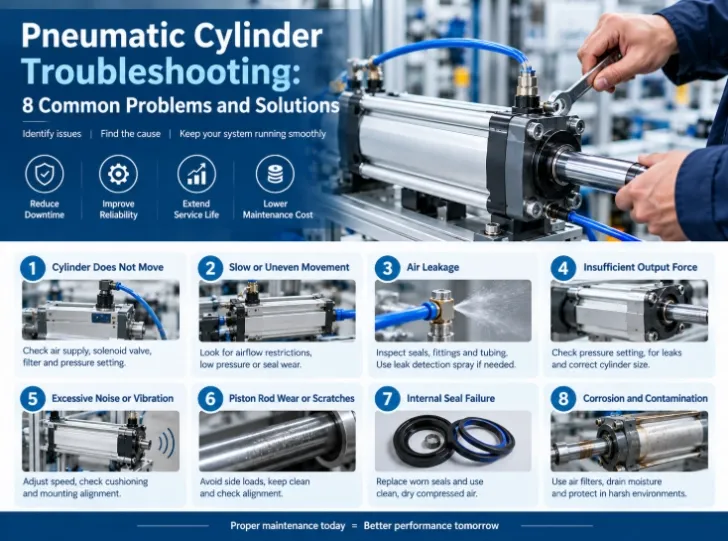
Eight of the most common pneumatic cylinder problems and practical ways to solve them.
564e0444-eedb-4651-85db-8a199a560158
Pneumatic Cylinder Troubleshooting: 8 Common Problems and Practical Solutions
Pneumatic cylinders are widely used in industrial automation because of their fast response, simple structure, and reliable performance. However, even a high-quality cylinder can develop problems after long-term operation if the air supply, installation, or maintenance is not properly managed. Early diagnosis not only minimizes downtime but also extends the service life of the entire pneumatic system.
Below are eight of the most common pneumatic cylinder problems and practical ways to solve them.

1. Cylinder Does Not Move

One of the most common issues is a cylinder that fails to extend or retract.
Before replacing the cylinder, check whether compressed air is reaching the actuator. A blocked air line, damaged solenoid valve, or insufficient supply pressure may prevent the cylinder from operating. Also inspect the air preparation unit to ensure the filter is not clogged and the regulator is correctly adjusted.

2. Slow or Uneven Movement

If the cylinder moves slowly or hesitates during operation, the problem is often related to airflow restriction.
Possible causes include dirty filters, undersized tubing, partially closed flow control valves, or insufficient air pressure. Internal seal wear can also increase friction and reduce movement speed.
Keeping the air supply clean and ensuring adequate airflow will usually improve cylinder performance.

3. Air Leakage

Air leakage reduces efficiency and increases compressed air consumption.
Leaks may occur around the piston rod, end caps, pneumatic fittings, or tubing connections. Small leaks are often difficult to hear but can be detected using a leak detection spray or by monitoring pressure loss during machine shutdown.
Replacing damaged seals and tightening loose fittings can prevent unnecessary energy loss.

4. Insufficient Output Force

If the cylinder cannot push or hold the required load, first verify that the operating pressure meets the application requirements.
A pressure regulator set too low, air leakage, or an incorrectly sized cylinder may all reduce output force. In some cases, the application itself has changed and now requires a larger bore cylinder.
Selecting the correct cylinder size during the design stage is the best way to avoid this problem.

5. Excessive Noise or Vibration

Unusual noise during operation often indicates mechanical or pneumatic issues.
High impact at the end of the stroke may result from excessive operating speed or improper cushioning adjustment. Loose mounting brackets or misalignment between the cylinder and the load can also generate vibration.
Proper installation and speed adjustment help ensure smooth operation.

6. Piston Rod Wear or Scratches

A damaged piston rod can quickly destroy internal seals and shorten cylinder life.
Rod damage is usually caused by side loading, poor alignment, or contaminants entering the cylinder. Installing external guides for heavy loads and keeping the working environment clean will significantly reduce rod wear.
Regular visual inspection allows small problems to be corrected before serious damage occurs.

7. Internal Seal Failure

Over time, piston seals naturally wear due to repeated movement and pressure cycles.
Typical symptoms include reduced speed, unstable movement, loss of force, or continuous internal air leakage. When these signs appear, replacing the seal kit is often more economical than replacing the complete cylinder.
Using clean, dry compressed air greatly extends seal life.

8. Corrosion and Contamination

Moisture, dust, metal particles, and chemical vapors can gradually damage cylinder components.
Installing a suitable air filter, draining condensate regularly, and protecting cylinders in harsh environments help prevent corrosion and contamination. For outdoor or dusty applications, protective rod boots can provide additional protection.

Preventive Maintenance Is the Best Solution

Most pneumatic cylinder failures can be prevented through routine inspection rather than emergency repairs. Operators should periodically check air pressure, fittings, seals, mounting bolts, piston rod condition, and overall cylinder performance.
Replacing inexpensive wear parts before failure occurs helps reduce unexpected downtime and lowers maintenance costs.

Conclusion

Troubleshooting a pneumatic cylinder begins with understanding the complete pneumatic system rather than focusing only on the actuator itself. Air quality, pressure stability, proper installation, and regular maintenance all influence cylinder performance.
By identifying common problems early and applying the correct corrective measures, manufacturers can improve equipment reliability, extend cylinder service life, and maintain efficient production with minimal interruptions.
Read next

Sep 9, 2026pneumatic cylinder

Pneumatic Cylinder Troubleshooting: 8 Common Problems and Practical Solutions

Eight of the most common pneumatic cylinder problems and practical ways to solve them.

564e0444-eedb-4651-85db-8a199a560158
Pneumatic Cylinder Troubleshooting: 8 Common Problems and Practical Solutions
Pneumatic cylinders are widely used in industrial automation because of their fast response, simple structure, and reliable performance. However, even a high-quality cylinder can develop problems after long-term operation if the air supply, installation, or maintenance is not properly managed. Early diagnosis not only minimizes downtime but also extends the service life of the entire pneumatic system.
Below are eight of the most common pneumatic cylinder problems and practical ways to solve them.

1. Cylinder Does Not Move

One of the most common issues is a cylinder that fails to extend or retract.
Before replacing the cylinder, check whether compressed air is reaching the actuator. A blocked air line, damaged solenoid valve, or insufficient supply pressure may prevent the cylinder from operating. Also inspect the air preparation unit to ensure the filter is not clogged and the regulator is correctly adjusted.

2. Slow or Uneven Movement

If the cylinder moves slowly or hesitates during operation, the problem is often related to airflow restriction.
Possible causes include dirty filters, undersized tubing, partially closed flow control valves, or insufficient air pressure. Internal seal wear can also increase friction and reduce movement speed.
Keeping the air supply clean and ensuring adequate airflow will usually improve cylinder performance.

3. Air Leakage

Air leakage reduces efficiency and increases compressed air consumption.
Leaks may occur around the piston rod, end caps, pneumatic fittings, or tubing connections. Small leaks are often difficult to hear but can be detected using a leak detection spray or by monitoring pressure loss during machine shutdown.
Replacing damaged seals and tightening loose fittings can prevent unnecessary energy loss.

4. Insufficient Output Force

If the cylinder cannot push or hold the required load, first verify that the operating pressure meets the application requirements.
A pressure regulator set too low, air leakage, or an incorrectly sized cylinder may all reduce output force. In some cases, the application itself has changed and now requires a larger bore cylinder.
Selecting the correct cylinder size during the design stage is the best way to avoid this problem.

5. Excessive Noise or Vibration

Unusual noise during operation often indicates mechanical or pneumatic issues.
High impact at the end of the stroke may result from excessive operating speed or improper cushioning adjustment. Loose mounting brackets or misalignment between the cylinder and the load can also generate vibration.
Proper installation and speed adjustment help ensure smooth operation.

6. Piston Rod Wear or Scratches

A damaged piston rod can quickly destroy internal seals and shorten cylinder life.
Rod damage is usually caused by side loading, poor alignment, or contaminants entering the cylinder. Installing external guides for heavy loads and keeping the working environment clean will significantly reduce rod wear.
Regular visual inspection allows small problems to be corrected before serious damage occurs.

7. Internal Seal Failure

Over time, piston seals naturally wear due to repeated movement and pressure cycles.
Typical symptoms include reduced speed, unstable movement, loss of force, or continuous internal air leakage. When these signs appear, replacing the seal kit is often more economical than replacing the complete cylinder.
Using clean, dry compressed air greatly extends seal life.

8. Corrosion and Contamination

Moisture, dust, metal particles, and chemical vapors can gradually damage cylinder components.
Installing a suitable air filter, draining condensate regularly, and protecting cylinders in harsh environments help prevent corrosion and contamination. For outdoor or dusty applications, protective rod boots can provide additional protection.

Preventive Maintenance Is the Best Solution

Most pneumatic cylinder failures can be prevented through routine inspection rather than emergency repairs. Operators should periodically check air pressure, fittings, seals, mounting bolts, piston rod condition, and overall cylinder performance.
Replacing inexpensive wear parts before failure occurs helps reduce unexpected downtime and lowers maintenance costs.

Conclusion

Troubleshooting a pneumatic cylinder begins with understanding the complete pneumatic system rather than focusing only on the actuator itself. Air quality, pressure stability, proper installation, and regular maintenance all influence cylinder performance.
By identifying common problems early and applying the correct corrective measures, manufacturers can improve equipment reliability, extend cylinder service life, and maintain efficient production with minimal interruptions.

Sep 9, 2026pneumatic cylinder

Pneumatic Cylinder Troubleshooting: 8 Common Problems and Practical Solutions

Eight of the most common pneumatic cylinder problems and practical ways to solve them.

564e0444-eedb-4651-85db-8a199a560158
Pneumatic Cylinder Troubleshooting: 8 Common Problems and Practical Solutions
Pneumatic cylinders are widely used in industrial automation because of their fast response, simple structure, and reliable performance. However, even a high-quality cylinder can develop problems after long-term operation if the air supply, installation, or maintenance is not properly managed. Early diagnosis not only minimizes downtime but also extends the service life of the entire pneumatic system.
Below are eight of the most common pneumatic cylinder problems and practical ways to solve them.

1. Cylinder Does Not Move

One of the most common issues is a cylinder that fails to extend or retract.
Before replacing the cylinder, check whether compressed air is reaching the actuator. A blocked air line, damaged solenoid valve, or insufficient supply pressure may prevent the cylinder from operating. Also inspect the air preparation unit to ensure the filter is not clogged and the regulator is correctly adjusted.

2. Slow or Uneven Movement

If the cylinder moves slowly or hesitates during operation, the problem is often related to airflow restriction.
Possible causes include dirty filters, undersized tubing, partially closed flow control valves, or insufficient air pressure. Internal seal wear can also increase friction and reduce movement speed.
Keeping the air supply clean and ensuring adequate airflow will usually improve cylinder performance.

3. Air Leakage

Air leakage reduces efficiency and increases compressed air consumption.
Leaks may occur around the piston rod, end caps, pneumatic fittings, or tubing connections. Small leaks are often difficult to hear but can be detected using a leak detection spray or by monitoring pressure loss during machine shutdown.
Replacing damaged seals and tightening loose fittings can prevent unnecessary energy loss.

4. Insufficient Output Force

If the cylinder cannot push or hold the required load, first verify that the operating pressure meets the application requirements.
A pressure regulator set too low, air leakage, or an incorrectly sized cylinder may all reduce output force. In some cases, the application itself has changed and now requires a larger bore cylinder.
Selecting the correct cylinder size during the design stage is the best way to avoid this problem.

5. Excessive Noise or Vibration

Unusual noise during operation often indicates mechanical or pneumatic issues.
High impact at the end of the stroke may result from excessive operating speed or improper cushioning adjustment. Loose mounting brackets or misalignment between the cylinder and the load can also generate vibration.
Proper installation and speed adjustment help ensure smooth operation.

6. Piston Rod Wear or Scratches

A damaged piston rod can quickly destroy internal seals and shorten cylinder life.
Rod damage is usually caused by side loading, poor alignment, or contaminants entering the cylinder. Installing external guides for heavy loads and keeping the working environment clean will significantly reduce rod wear.
Regular visual inspection allows small problems to be corrected before serious damage occurs.

7. Internal Seal Failure

Over time, piston seals naturally wear due to repeated movement and pressure cycles.
Typical symptoms include reduced speed, unstable movement, loss of force, or continuous internal air leakage. When these signs appear, replacing the seal kit is often more economical than replacing the complete cylinder.
Using clean, dry compressed air greatly extends seal life.

8. Corrosion and Contamination

Moisture, dust, metal particles, and chemical vapors can gradually damage cylinder components.
Installing a suitable air filter, draining condensate regularly, and protecting cylinders in harsh environments help prevent corrosion and contamination. For outdoor or dusty applications, protective rod boots can provide additional protection.

Preventive Maintenance Is the Best Solution

Most pneumatic cylinder failures can be prevented through routine inspection rather than emergency repairs. Operators should periodically check air pressure, fittings, seals, mounting bolts, piston rod condition, and overall cylinder performance.
Replacing inexpensive wear parts before failure occurs helps reduce unexpected downtime and lowers maintenance costs.

Conclusion

Troubleshooting a pneumatic cylinder begins with understanding the complete pneumatic system rather than focusing only on the actuator itself. Air quality, pressure stability, proper installation, and regular maintenance all influence cylinder performance.
By identifying common problems early and applying the correct corrective measures, manufacturers can improve equipment reliability, extend cylinder service life, and maintain efficient production with minimal interruptions.


Recommended articles

Guides visitors may want next

Helpful guides, field notes, and stories for choosing with more context.