
Aug 23, 2026pneumatic cylinder

Pneumatic Cylinders: Types, Selection and Industrial Applications

Learn about the main types of pneumatic cylinders, essential selection factors, common industrial applications, and practical ways to improve service life and performance.
123
Pneumatic Cylinders: Types, Selection and Industrial Applications
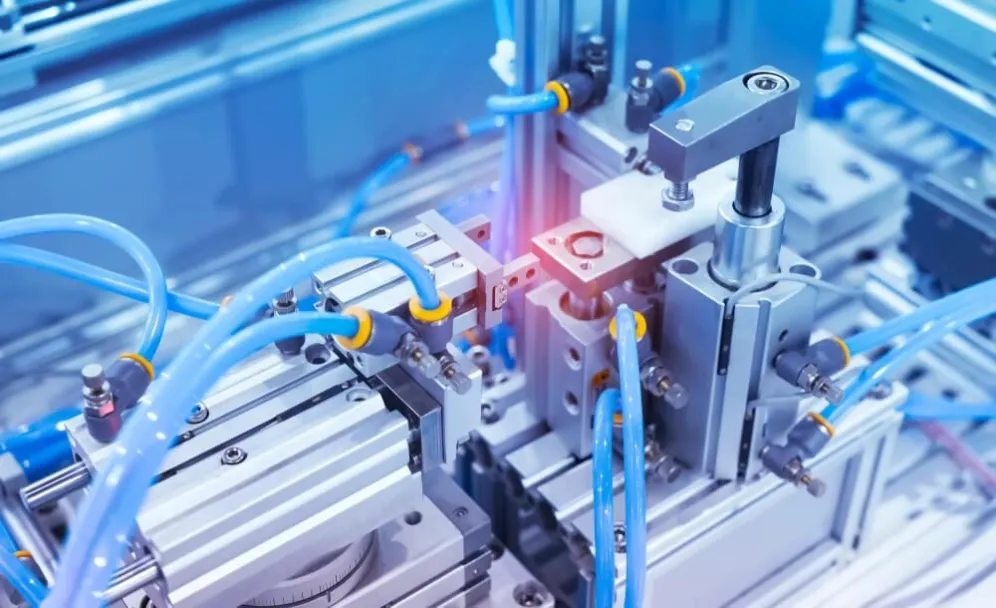
Pneumatic cylinders convert compressed air into linear or rotary mechanical motion. They are widely used in automation because they provide fast movement, simple control, reliable operation, and a competitive initial cost. From packaging and textile machines to assembly lines and material-handling equipment, pneumatic cylinders perform essential tasks such as pushing, lifting, clamping, positioning, and sorting.
Selecting the correct cylinder, however, requires more than matching the port size or outside dimensions. Engineers must consider force, stroke, operating pressure, speed, load direction, installation space, and environmental conditions.

Main Types of Pneumatic Cylinders

Standard Cylinders

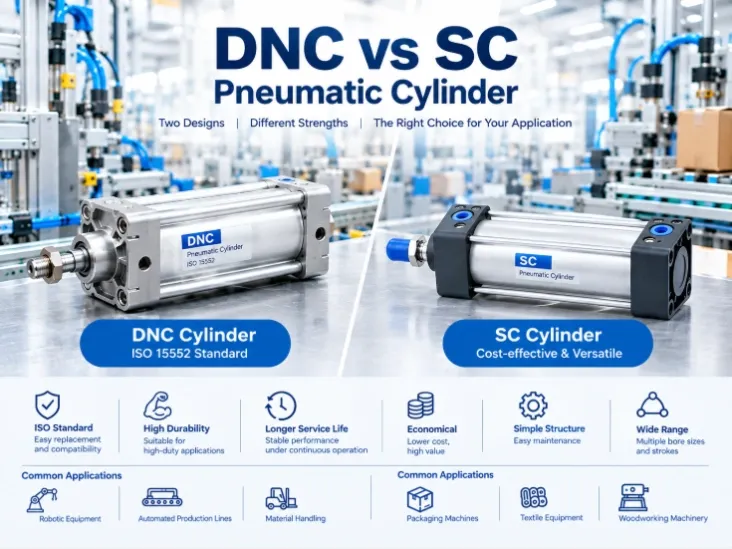
Standard profile or tie-rod cylinders are used for general industrial applications. They offer a wide range of bore sizes, strokes, mounting accessories, and sensor options. Common series include SC, DNC, SI, and ISO-standard cylinders.
They are suitable for packaging machinery, production lines, assembly equipment, and material-transfer systems.

Compact Cylinders

Compact cylinders provide a shorter overall length than standard cylinders with the same bore and stroke. They are ideal for machinery with limited installation space.
CQ2, SDA cylinders are often used for short-stroke clamping, pressing, positioning, and product-stopping operations.

Mini Cylinders

Mini cylinders use a round stainless-steel barrel and have a lightweight construction. They are commonly installed in small machines, electronic assembly equipment, textile machinery, and light automation.

Guided Cylinders

Guided cylinders include guide rods or slide bearings that resist rotation and absorb side loads. They provide better positioning stability than a standard cylinder and are suitable for lifting, clamping, pushing, and pick-and-place applications.

Rodless Cylinders

A rodless cylinder moves a carriage along the cylinder body without an external piston rod. This design reduces the total installation length required for long strokes.
Rodless cylinders are frequently used in conveyor systems, automatic doors, transfer equipment, and material-handling machinery.

Twin-Rod and Multi-Position Cylinders

Twin-rod cylinders prevent rotation and provide stable movement for applications requiring accurate alignment. Multi-position cylinders can stop at several defined positions by combining two or more cylinder sections.

Rotary Actuators

Rotary pneumatic actuators convert compressed air into angular movement. They are used for turning, flipping, indexing, opening, and closing operations.

How to Select a Pneumatic Cylinder

Calculate the Required Force

Cylinder force is determined primarily by piston area and operating pressure. The theoretical extending force can be estimated using:
Force = Air Pressure × Piston Area
Actual output force is lower because of friction, pressure loss, and operating conditions. A suitable safety factor should therefore be included. For many general applications, the selected cylinder should provide theoretical force greater than the calculated load requirement.

Select the Bore Size

The bore diameter determines the available output force. A larger bore produces more force but also consumes more compressed air during every cycle.
Oversizing increases energy costs, while undersizing can cause unstable movement or failure to complete the stroke.

Determine the Stroke

The stroke must cover the required working distance without forcing the piston against the end cap. For long strokes, engineers should check piston-rod buckling, installation alignment, and available space.
A rodless cylinder may be more suitable when a conventional rod cylinder would make the machine excessively long.

Consider Speed and Cycle Frequency

Cylinder speed depends on airflow, valve capacity, tubing diameter, pressure, and load. An adequately sized solenoid valve and correctly selected tubing are essential for stable performance.
Excessive speed can cause impact, vibration, noise, and premature seal wear. Flow control valves and cushioning should be used to manage motion.

Evaluate Side Loads

Standard piston rods are designed mainly for axial force. Side loading can damage the rod bearing and seals, leading to leakage and reduced service life.
Use an external guide or guided cylinder when the application produces lateral force, rotation, or an offset load.

Check the Operating Environment

Temperature, moisture, dust, fibers, chemicals, welding spatter, and washdown conditions can affect cylinder performance.
Special seals, stainless-steel piston rods, corrosion-resistant materials, rod boots, or protected sensors may be required for demanding environments.

Select Mounting and Sensors

Common mounting options include foot, flange, trunnion, clevis, and pivot mounts. The mounting method should allow the cylinder to move without misalignment.
Magnetic switches can confirm the piston position and send feedback to a PLC or machine controller.

Industrial Applications

Pneumatic cylinders are widely used in:
  • Packaging machines for sealing, cutting, pushing, and carton handling
  • Material-handling systems for sorting, lifting, stopping, and transferring
  • Textile machinery for fabric clamping, yarn control, and cutting
  • Food-processing equipment for filling, positioning, and packaging
  • CNC equipment for doors, tool clamping, and workpiece positioning
  • Assembly lines for pressing, feeding, and component insertion
  • Printing machinery for roller positioning and paper control
  • Woodworking equipment for clamping and material feeding

Improving Cylinder Service Life

Use clean, dry, and properly regulated compressed air. Prevent mechanical misalignment and side loading, control the operating speed, and avoid unnecessary end-of-stroke impact. Tubing, fittings, valves, silencers, and filter elements should also be inspected regularly.
A cylinder problem may originate elsewhere in the pneumatic circuit. Slow movement, for example, can result from an undersized valve, restricted tubing, clogged silencer, low pressure, or an excessive load.

Conclusion

Pneumatic cylinders provide an efficient and flexible solution for industrial automation. The correct type depends on the required force, stroke, speed, installation space, load direction, and operating environment.
By selecting the appropriate cylinder bore, valve capacity, tubing size, mounting method, and cushioning, machine builders can achieve reliable motion while reducing air consumption and maintenance costs.
When requesting a quotation, provide the cylinder type, bore, stroke, operating pressure, mounting style, port thread, sensor requirements, quantity, and application details. This information helps the supplier recommend a cylinder that matches the machine’s actual working conditions.
Read next

Aug 23, 2026pneumatic cylinder

Pneumatic Cylinders: Types, Selection and Industrial Applications

Learn about the main types of pneumatic cylinders, essential selection factors, common industrial applications, and practical ways to improve service life and performance.

123
Pneumatic Cylinders: Types, Selection and Industrial Applications
Pneumatic cylinders convert compressed air into linear or rotary mechanical motion. They are widely used in automation because they provide fast movement, simple control, reliable operation, and a competitive initial cost. From packaging and textile machines to assembly lines and material-handling equipment, pneumatic cylinders perform essential tasks such as pushing, lifting, clamping, positioning, and sorting.
Selecting the correct cylinder, however, requires more than matching the port size or outside dimensions. Engineers must consider force, stroke, operating pressure, speed, load direction, installation space, and environmental conditions.

Main Types of Pneumatic Cylinders

Standard Cylinders

Standard profile or tie-rod cylinders are used for general industrial applications. They offer a wide range of bore sizes, strokes, mounting accessories, and sensor options. Common series include SC, DNC, SI, and ISO-standard cylinders.
They are suitable for packaging machinery, production lines, assembly equipment, and material-transfer systems.

Compact Cylinders

Compact cylinders provide a shorter overall length than standard cylinders with the same bore and stroke. They are ideal for machinery with limited installation space.
CQ2, SDA cylinders are often used for short-stroke clamping, pressing, positioning, and product-stopping operations.

Mini Cylinders

Mini cylinders use a round stainless-steel barrel and have a lightweight construction. They are commonly installed in small machines, electronic assembly equipment, textile machinery, and light automation.

Guided Cylinders

Guided cylinders include guide rods or slide bearings that resist rotation and absorb side loads. They provide better positioning stability than a standard cylinder and are suitable for lifting, clamping, pushing, and pick-and-place applications.

Rodless Cylinders

A rodless cylinder moves a carriage along the cylinder body without an external piston rod. This design reduces the total installation length required for long strokes.
Rodless cylinders are frequently used in conveyor systems, automatic doors, transfer equipment, and material-handling machinery.

Twin-Rod and Multi-Position Cylinders

Twin-rod cylinders prevent rotation and provide stable movement for applications requiring accurate alignment. Multi-position cylinders can stop at several defined positions by combining two or more cylinder sections.

Rotary Actuators

Rotary pneumatic actuators convert compressed air into angular movement. They are used for turning, flipping, indexing, opening, and closing operations.

How to Select a Pneumatic Cylinder

Calculate the Required Force

Cylinder force is determined primarily by piston area and operating pressure. The theoretical extending force can be estimated using:
Force = Air Pressure × Piston Area
Actual output force is lower because of friction, pressure loss, and operating conditions. A suitable safety factor should therefore be included. For many general applications, the selected cylinder should provide theoretical force greater than the calculated load requirement.

Select the Bore Size

The bore diameter determines the available output force. A larger bore produces more force but also consumes more compressed air during every cycle.
Oversizing increases energy costs, while undersizing can cause unstable movement or failure to complete the stroke.

Determine the Stroke

The stroke must cover the required working distance without forcing the piston against the end cap. For long strokes, engineers should check piston-rod buckling, installation alignment, and available space.
A rodless cylinder may be more suitable when a conventional rod cylinder would make the machine excessively long.

Consider Speed and Cycle Frequency

Cylinder speed depends on airflow, valve capacity, tubing diameter, pressure, and load. An adequately sized solenoid valve and correctly selected tubing are essential for stable performance.
Excessive speed can cause impact, vibration, noise, and premature seal wear. Flow control valves and cushioning should be used to manage motion.

Evaluate Side Loads

Standard piston rods are designed mainly for axial force. Side loading can damage the rod bearing and seals, leading to leakage and reduced service life.
Use an external guide or guided cylinder when the application produces lateral force, rotation, or an offset load.

Check the Operating Environment

Temperature, moisture, dust, fibers, chemicals, welding spatter, and washdown conditions can affect cylinder performance.
Special seals, stainless-steel piston rods, corrosion-resistant materials, rod boots, or protected sensors may be required for demanding environments.

Select Mounting and Sensors

Common mounting options include foot, flange, trunnion, clevis, and pivot mounts. The mounting method should allow the cylinder to move without misalignment.
Magnetic switches can confirm the piston position and send feedback to a PLC or machine controller.

Industrial Applications

Pneumatic cylinders are widely used in:
  • Packaging machines for sealing, cutting, pushing, and carton handling
  • Material-handling systems for sorting, lifting, stopping, and transferring
  • Textile machinery for fabric clamping, yarn control, and cutting
  • Food-processing equipment for filling, positioning, and packaging
  • CNC equipment for doors, tool clamping, and workpiece positioning
  • Assembly lines for pressing, feeding, and component insertion
  • Printing machinery for roller positioning and paper control
  • Woodworking equipment for clamping and material feeding

Improving Cylinder Service Life

Use clean, dry, and properly regulated compressed air. Prevent mechanical misalignment and side loading, control the operating speed, and avoid unnecessary end-of-stroke impact. Tubing, fittings, valves, silencers, and filter elements should also be inspected regularly.
A cylinder problem may originate elsewhere in the pneumatic circuit. Slow movement, for example, can result from an undersized valve, restricted tubing, clogged silencer, low pressure, or an excessive load.

Conclusion

Pneumatic cylinders provide an efficient and flexible solution for industrial automation. The correct type depends on the required force, stroke, speed, installation space, load direction, and operating environment.
By selecting the appropriate cylinder bore, valve capacity, tubing size, mounting method, and cushioning, machine builders can achieve reliable motion while reducing air consumption and maintenance costs.
When requesting a quotation, provide the cylinder type, bore, stroke, operating pressure, mounting style, port thread, sensor requirements, quantity, and application details. This information helps the supplier recommend a cylinder that matches the machine’s actual working conditions.

Aug 23, 2026pneumatic cylinder

Pneumatic Cylinders: Types, Selection and Industrial Applications

Learn about the main types of pneumatic cylinders, essential selection factors, common industrial applications, and practical ways to improve service life and performance.

123
Pneumatic Cylinders: Types, Selection and Industrial Applications
Pneumatic cylinders convert compressed air into linear or rotary mechanical motion. They are widely used in automation because they provide fast movement, simple control, reliable operation, and a competitive initial cost. From packaging and textile machines to assembly lines and material-handling equipment, pneumatic cylinders perform essential tasks such as pushing, lifting, clamping, positioning, and sorting.
Selecting the correct cylinder, however, requires more than matching the port size or outside dimensions. Engineers must consider force, stroke, operating pressure, speed, load direction, installation space, and environmental conditions.

Main Types of Pneumatic Cylinders

Standard Cylinders

Standard profile or tie-rod cylinders are used for general industrial applications. They offer a wide range of bore sizes, strokes, mounting accessories, and sensor options. Common series include SC, DNC, SI, and ISO-standard cylinders.
They are suitable for packaging machinery, production lines, assembly equipment, and material-transfer systems.

Compact Cylinders

Compact cylinders provide a shorter overall length than standard cylinders with the same bore and stroke. They are ideal for machinery with limited installation space.
CQ2, SDA cylinders are often used for short-stroke clamping, pressing, positioning, and product-stopping operations.

Mini Cylinders

Mini cylinders use a round stainless-steel barrel and have a lightweight construction. They are commonly installed in small machines, electronic assembly equipment, textile machinery, and light automation.

Guided Cylinders

Guided cylinders include guide rods or slide bearings that resist rotation and absorb side loads. They provide better positioning stability than a standard cylinder and are suitable for lifting, clamping, pushing, and pick-and-place applications.

Rodless Cylinders

A rodless cylinder moves a carriage along the cylinder body without an external piston rod. This design reduces the total installation length required for long strokes.
Rodless cylinders are frequently used in conveyor systems, automatic doors, transfer equipment, and material-handling machinery.

Twin-Rod and Multi-Position Cylinders

Twin-rod cylinders prevent rotation and provide stable movement for applications requiring accurate alignment. Multi-position cylinders can stop at several defined positions by combining two or more cylinder sections.

Rotary Actuators

Rotary pneumatic actuators convert compressed air into angular movement. They are used for turning, flipping, indexing, opening, and closing operations.

How to Select a Pneumatic Cylinder

Calculate the Required Force

Cylinder force is determined primarily by piston area and operating pressure. The theoretical extending force can be estimated using:
Force = Air Pressure × Piston Area
Actual output force is lower because of friction, pressure loss, and operating conditions. A suitable safety factor should therefore be included. For many general applications, the selected cylinder should provide theoretical force greater than the calculated load requirement.

Select the Bore Size

The bore diameter determines the available output force. A larger bore produces more force but also consumes more compressed air during every cycle.
Oversizing increases energy costs, while undersizing can cause unstable movement or failure to complete the stroke.

Determine the Stroke

The stroke must cover the required working distance without forcing the piston against the end cap. For long strokes, engineers should check piston-rod buckling, installation alignment, and available space.
A rodless cylinder may be more suitable when a conventional rod cylinder would make the machine excessively long.

Consider Speed and Cycle Frequency

Cylinder speed depends on airflow, valve capacity, tubing diameter, pressure, and load. An adequately sized solenoid valve and correctly selected tubing are essential for stable performance.
Excessive speed can cause impact, vibration, noise, and premature seal wear. Flow control valves and cushioning should be used to manage motion.

Evaluate Side Loads

Standard piston rods are designed mainly for axial force. Side loading can damage the rod bearing and seals, leading to leakage and reduced service life.
Use an external guide or guided cylinder when the application produces lateral force, rotation, or an offset load.

Check the Operating Environment

Temperature, moisture, dust, fibers, chemicals, welding spatter, and washdown conditions can affect cylinder performance.
Special seals, stainless-steel piston rods, corrosion-resistant materials, rod boots, or protected sensors may be required for demanding environments.

Select Mounting and Sensors

Common mounting options include foot, flange, trunnion, clevis, and pivot mounts. The mounting method should allow the cylinder to move without misalignment.
Magnetic switches can confirm the piston position and send feedback to a PLC or machine controller.

Industrial Applications

Pneumatic cylinders are widely used in:
  • Packaging machines for sealing, cutting, pushing, and carton handling
  • Material-handling systems for sorting, lifting, stopping, and transferring
  • Textile machinery for fabric clamping, yarn control, and cutting
  • Food-processing equipment for filling, positioning, and packaging
  • CNC equipment for doors, tool clamping, and workpiece positioning
  • Assembly lines for pressing, feeding, and component insertion
  • Printing machinery for roller positioning and paper control
  • Woodworking equipment for clamping and material feeding

Improving Cylinder Service Life

Use clean, dry, and properly regulated compressed air. Prevent mechanical misalignment and side loading, control the operating speed, and avoid unnecessary end-of-stroke impact. Tubing, fittings, valves, silencers, and filter elements should also be inspected regularly.
A cylinder problem may originate elsewhere in the pneumatic circuit. Slow movement, for example, can result from an undersized valve, restricted tubing, clogged silencer, low pressure, or an excessive load.

Conclusion

Pneumatic cylinders provide an efficient and flexible solution for industrial automation. The correct type depends on the required force, stroke, speed, installation space, load direction, and operating environment.
By selecting the appropriate cylinder bore, valve capacity, tubing size, mounting method, and cushioning, machine builders can achieve reliable motion while reducing air consumption and maintenance costs.
When requesting a quotation, provide the cylinder type, bore, stroke, operating pressure, mounting style, port thread, sensor requirements, quantity, and application details. This information helps the supplier recommend a cylinder that matches the machine’s actual working conditions.


Recommended articles

Guides visitors may want next

Helpful guides, field notes, and stories for choosing with more context.