Aug 31, 2026pneumatic cylinder

Single-Acting vs. Double-Acting Pneumatic Cylinders: Which One Should You Choose?

The correct choice depends on the required force, stroke, cycle rate, air consumption, control accuracy and safe behavior during pressure loss.
f310def5-14d4-47a9-b750-4138dbdf16c5
Single-Acting vs. Double-Acting Pneumatic Cylinders: Which One Should You Choose?
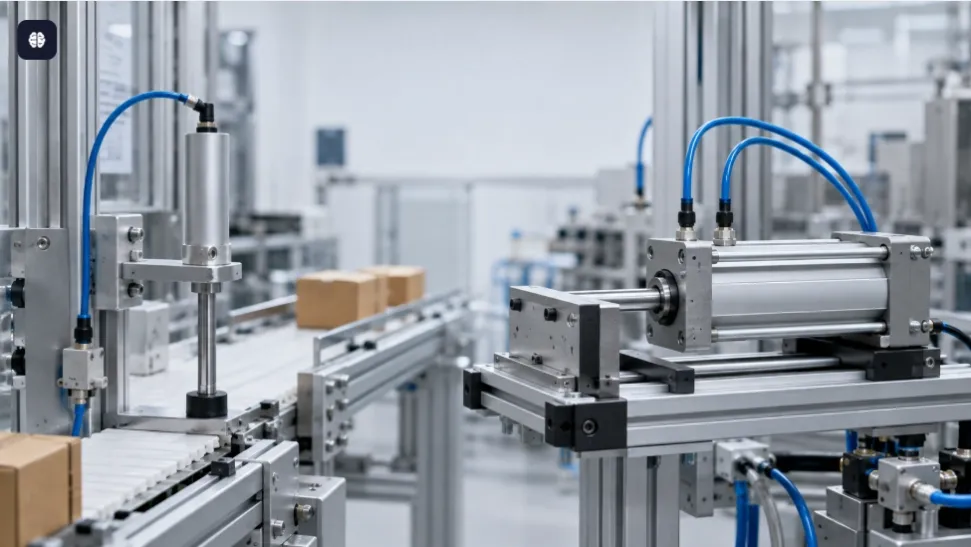
Pneumatic cylinders are widely used for pushing, pulling, lifting, clamping and positioning in automated machinery. One of the first decisions when selecting a cylinder is whether to use a single-acting or double-acting design.
Both types convert compressed air into linear movement, but they differ in their internal structure, air consumption, control method and response when the air supply is removed. Understanding these differences can prevent an unsuitable cylinder from causing unstable movement or unnecessary operating costs.

How Does a Single-Acting Cylinder Work?

A single-acting cylinder uses compressed air to move the piston in one direction. An internal spring or external load returns the piston when the air pressure is released.
Depending on the design, the piston rod may be normally retracted or normally extended. A spring-return cylinder is often selected when the mechanism must automatically return to a defined position after a loss of air pressure.
Because only one cylinder chamber requires compressed air, a single-acting cylinder normally uses one air port and a simpler control valve. It also consumes less air per complete cycle than a comparable double-acting cylinder.
However, the return spring occupies part of the internal cylinder space and applies resistance during the powered stroke. As a result, the usable output force is lower than the theoretical force calculated from bore size and pressure.
Spring performance can also change slightly over time, particularly in high-cycle applications.

How Does a Double-Acting Cylinder Work?

A double-acting cylinder has two air ports. Compressed air enters one chamber to extend the piston rod and the other chamber to retract it.
This arrangement provides powered movement in both directions. Extension and retraction speeds can be adjusted independently with flow-control valves, giving the machine designer greater control over the cylinder’s movement.
Double-acting cylinders are widely used in packaging machines, assembly equipment, material-handling systems and production lines where consistent force and repeatable movement are required.
Since there is no return spring working against the piston, more of the available air pressure can be converted into useful force. Retraction force is still lower than extension force because the piston rod reduces the effective area on one side of the piston.

Force and Motion Control

A single-acting cylinder provides its main working force in only one direction. The return movement depends on the spring or an external force, so its speed and force are less adjustable.
A double-acting cylinder provides pneumatic force in both directions. This makes it better suited to applications where the cylinder must pull as well as push, move a changing load or maintain a controlled speed throughout the cycle.
For example, a spring-return cylinder may be suitable for operating a light stop pin. A double-acting cylinder is generally a better choice for moving a product between two positions or controlling a machine door.

Air Consumption and Circuit Cost

Single-acting cylinders use less compressed air because only one side of the piston is pressurized. They also require simpler valves and fewer air lines. In a low-cycle application with a short stroke, this can reduce both component cost and air consumption.
The difference becomes less important when the machine requires high force, long strokes or continuous cycling. Spring limitations may require a larger single-acting cylinder, reducing some of the expected savings.
Double-acting cylinders consume air during both extension and retraction, but their greater control and broader size range often make them more economical for demanding industrial applications.

Stroke and Cylinder Size

Single-acting cylinders are normally used for shorter strokes. A longer spring requires more space and may not provide consistent return force throughout the complete travel.
Double-acting cylinders are available with much longer strokes and a wider selection of bore sizes, cushions and mounting accessories. They are therefore more suitable for general machine automation and long-distance movement.

Safety During Pressure Loss

A single-acting cylinder can return to a known position when air pressure is lost. This may be useful for releasing a clamp, retracting a pin or opening a mechanism.
However, a spring return should not automatically be considered a complete safety system. The machine’s load, orientation and stored energy must still be evaluated.
A double-acting cylinder normally remains subject to the external load when pressure disappears. If an uncontrolled movement could create a hazard, additional components such as pilot-operated check valves, rod locks or mechanical supports may be required.

Which Cylinder Should You Choose?

Choose a single-acting cylinder when:
  • Force is required in only one direction.
  • A spring-defined return position is useful.
  • The stroke is relatively short.
  • Low air consumption is important.
  • A simple pneumatic circuit is preferred.
Choose a double-acting cylinder when:
  • Controlled force is required in both directions.
  • Extension and retraction speeds must be adjusted separately.
  • The application requires a longer stroke.
  • The cylinder operates frequently.
  • The load must be moved positively in both directions.
Neither design is universally better. The correct choice depends on the required force, stroke, cycle rate, air consumption, control accuracy and safe behavior during pressure loss. Reviewing these conditions before ordering will produce a more reliable and efficient pneumatic system.

Read next

Aug 31, 2026pneumatic cylinder

Single-Acting vs. Double-Acting Pneumatic Cylinders: Which One Should You Choose?

The correct choice depends on the required force, stroke, cycle rate, air consumption, control accuracy and safe behavior during pressure loss.

f310def5-14d4-47a9-b750-4138dbdf16c5
Single-Acting vs. Double-Acting Pneumatic Cylinders: Which One Should You Choose?
Pneumatic cylinders are widely used for pushing, pulling, lifting, clamping and positioning in automated machinery. One of the first decisions when selecting a cylinder is whether to use a single-acting or double-acting design.
Both types convert compressed air into linear movement, but they differ in their internal structure, air consumption, control method and response when the air supply is removed. Understanding these differences can prevent an unsuitable cylinder from causing unstable movement or unnecessary operating costs.

How Does a Single-Acting Cylinder Work?

A single-acting cylinder uses compressed air to move the piston in one direction. An internal spring or external load returns the piston when the air pressure is released.
Depending on the design, the piston rod may be normally retracted or normally extended. A spring-return cylinder is often selected when the mechanism must automatically return to a defined position after a loss of air pressure.
Because only one cylinder chamber requires compressed air, a single-acting cylinder normally uses one air port and a simpler control valve. It also consumes less air per complete cycle than a comparable double-acting cylinder.
However, the return spring occupies part of the internal cylinder space and applies resistance during the powered stroke. As a result, the usable output force is lower than the theoretical force calculated from bore size and pressure.
Spring performance can also change slightly over time, particularly in high-cycle applications.

How Does a Double-Acting Cylinder Work?

A double-acting cylinder has two air ports. Compressed air enters one chamber to extend the piston rod and the other chamber to retract it.
This arrangement provides powered movement in both directions. Extension and retraction speeds can be adjusted independently with flow-control valves, giving the machine designer greater control over the cylinder’s movement.
Double-acting cylinders are widely used in packaging machines, assembly equipment, material-handling systems and production lines where consistent force and repeatable movement are required.
Since there is no return spring working against the piston, more of the available air pressure can be converted into useful force. Retraction force is still lower than extension force because the piston rod reduces the effective area on one side of the piston.

Force and Motion Control

A single-acting cylinder provides its main working force in only one direction. The return movement depends on the spring or an external force, so its speed and force are less adjustable.
A double-acting cylinder provides pneumatic force in both directions. This makes it better suited to applications where the cylinder must pull as well as push, move a changing load or maintain a controlled speed throughout the cycle.
For example, a spring-return cylinder may be suitable for operating a light stop pin. A double-acting cylinder is generally a better choice for moving a product between two positions or controlling a machine door.

Air Consumption and Circuit Cost

Single-acting cylinders use less compressed air because only one side of the piston is pressurized. They also require simpler valves and fewer air lines. In a low-cycle application with a short stroke, this can reduce both component cost and air consumption.
The difference becomes less important when the machine requires high force, long strokes or continuous cycling. Spring limitations may require a larger single-acting cylinder, reducing some of the expected savings.
Double-acting cylinders consume air during both extension and retraction, but their greater control and broader size range often make them more economical for demanding industrial applications.

Stroke and Cylinder Size

Single-acting cylinders are normally used for shorter strokes. A longer spring requires more space and may not provide consistent return force throughout the complete travel.
Double-acting cylinders are available with much longer strokes and a wider selection of bore sizes, cushions and mounting accessories. They are therefore more suitable for general machine automation and long-distance movement.

Safety During Pressure Loss

A single-acting cylinder can return to a known position when air pressure is lost. This may be useful for releasing a clamp, retracting a pin or opening a mechanism.
However, a spring return should not automatically be considered a complete safety system. The machine’s load, orientation and stored energy must still be evaluated.
A double-acting cylinder normally remains subject to the external load when pressure disappears. If an uncontrolled movement could create a hazard, additional components such as pilot-operated check valves, rod locks or mechanical supports may be required.

Which Cylinder Should You Choose?

Choose a single-acting cylinder when:
  • Force is required in only one direction.
  • A spring-defined return position is useful.
  • The stroke is relatively short.
  • Low air consumption is important.
  • A simple pneumatic circuit is preferred.
Choose a double-acting cylinder when:
  • Controlled force is required in both directions.
  • Extension and retraction speeds must be adjusted separately.
  • The application requires a longer stroke.
  • The cylinder operates frequently.
  • The load must be moved positively in both directions.
Neither design is universally better. The correct choice depends on the required force, stroke, cycle rate, air consumption, control accuracy and safe behavior during pressure loss. Reviewing these conditions before ordering will produce a more reliable and efficient pneumatic system.

Aug 31, 2026pneumatic cylinder

Single-Acting vs. Double-Acting Pneumatic Cylinders: Which One Should You Choose?

The correct choice depends on the required force, stroke, cycle rate, air consumption, control accuracy and safe behavior during pressure loss.

f310def5-14d4-47a9-b750-4138dbdf16c5
Single-Acting vs. Double-Acting Pneumatic Cylinders: Which One Should You Choose?
Pneumatic cylinders are widely used for pushing, pulling, lifting, clamping and positioning in automated machinery. One of the first decisions when selecting a cylinder is whether to use a single-acting or double-acting design.
Both types convert compressed air into linear movement, but they differ in their internal structure, air consumption, control method and response when the air supply is removed. Understanding these differences can prevent an unsuitable cylinder from causing unstable movement or unnecessary operating costs.

How Does a Single-Acting Cylinder Work?

A single-acting cylinder uses compressed air to move the piston in one direction. An internal spring or external load returns the piston when the air pressure is released.
Depending on the design, the piston rod may be normally retracted or normally extended. A spring-return cylinder is often selected when the mechanism must automatically return to a defined position after a loss of air pressure.
Because only one cylinder chamber requires compressed air, a single-acting cylinder normally uses one air port and a simpler control valve. It also consumes less air per complete cycle than a comparable double-acting cylinder.
However, the return spring occupies part of the internal cylinder space and applies resistance during the powered stroke. As a result, the usable output force is lower than the theoretical force calculated from bore size and pressure.
Spring performance can also change slightly over time, particularly in high-cycle applications.

How Does a Double-Acting Cylinder Work?

A double-acting cylinder has two air ports. Compressed air enters one chamber to extend the piston rod and the other chamber to retract it.
This arrangement provides powered movement in both directions. Extension and retraction speeds can be adjusted independently with flow-control valves, giving the machine designer greater control over the cylinder’s movement.
Double-acting cylinders are widely used in packaging machines, assembly equipment, material-handling systems and production lines where consistent force and repeatable movement are required.
Since there is no return spring working against the piston, more of the available air pressure can be converted into useful force. Retraction force is still lower than extension force because the piston rod reduces the effective area on one side of the piston.

Force and Motion Control

A single-acting cylinder provides its main working force in only one direction. The return movement depends on the spring or an external force, so its speed and force are less adjustable.
A double-acting cylinder provides pneumatic force in both directions. This makes it better suited to applications where the cylinder must pull as well as push, move a changing load or maintain a controlled speed throughout the cycle.
For example, a spring-return cylinder may be suitable for operating a light stop pin. A double-acting cylinder is generally a better choice for moving a product between two positions or controlling a machine door.

Air Consumption and Circuit Cost

Single-acting cylinders use less compressed air because only one side of the piston is pressurized. They also require simpler valves and fewer air lines. In a low-cycle application with a short stroke, this can reduce both component cost and air consumption.
The difference becomes less important when the machine requires high force, long strokes or continuous cycling. Spring limitations may require a larger single-acting cylinder, reducing some of the expected savings.
Double-acting cylinders consume air during both extension and retraction, but their greater control and broader size range often make them more economical for demanding industrial applications.

Stroke and Cylinder Size

Single-acting cylinders are normally used for shorter strokes. A longer spring requires more space and may not provide consistent return force throughout the complete travel.
Double-acting cylinders are available with much longer strokes and a wider selection of bore sizes, cushions and mounting accessories. They are therefore more suitable for general machine automation and long-distance movement.

Safety During Pressure Loss

A single-acting cylinder can return to a known position when air pressure is lost. This may be useful for releasing a clamp, retracting a pin or opening a mechanism.
However, a spring return should not automatically be considered a complete safety system. The machine’s load, orientation and stored energy must still be evaluated.
A double-acting cylinder normally remains subject to the external load when pressure disappears. If an uncontrolled movement could create a hazard, additional components such as pilot-operated check valves, rod locks or mechanical supports may be required.

Which Cylinder Should You Choose?

Choose a single-acting cylinder when:
  • Force is required in only one direction.
  • A spring-defined return position is useful.
  • The stroke is relatively short.
  • Low air consumption is important.
  • A simple pneumatic circuit is preferred.
Choose a double-acting cylinder when:
  • Controlled force is required in both directions.
  • Extension and retraction speeds must be adjusted separately.
  • The application requires a longer stroke.
  • The cylinder operates frequently.
  • The load must be moved positively in both directions.
Neither design is universally better. The correct choice depends on the required force, stroke, cycle rate, air consumption, control accuracy and safe behavior during pressure loss. Reviewing these conditions before ordering will produce a more reliable and efficient pneumatic system.


Recommended articles

Guides visitors may want next

Helpful guides, field notes, and stories for choosing with more context.