Aug 18, 2026pneumatic solenoid valve
Pneumatic Solutions for Textile Machinery
Major Pneumatic Applications in Textile Machinery,Essential Pneumatic Components for Textile Machinery
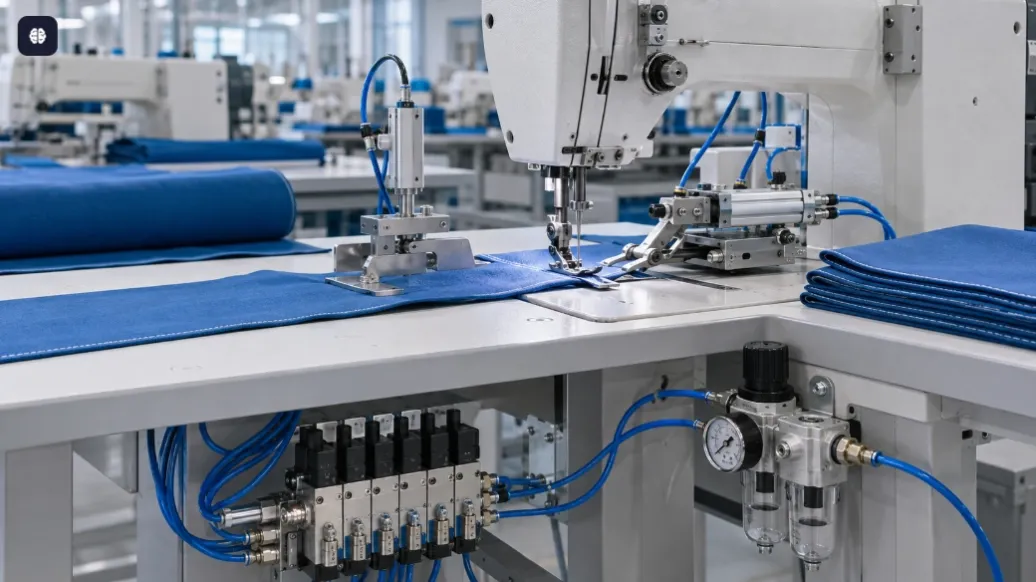
Pneumatic Solutions for Textile Machinery
Modern textile production requires high speed, precise movement, reliable material handling, and continuous operation. From spinning and weaving to dyeing, finishing, cutting, and packaging, textile machinery must perform thousands of repetitive movements while maintaining consistent product quality.
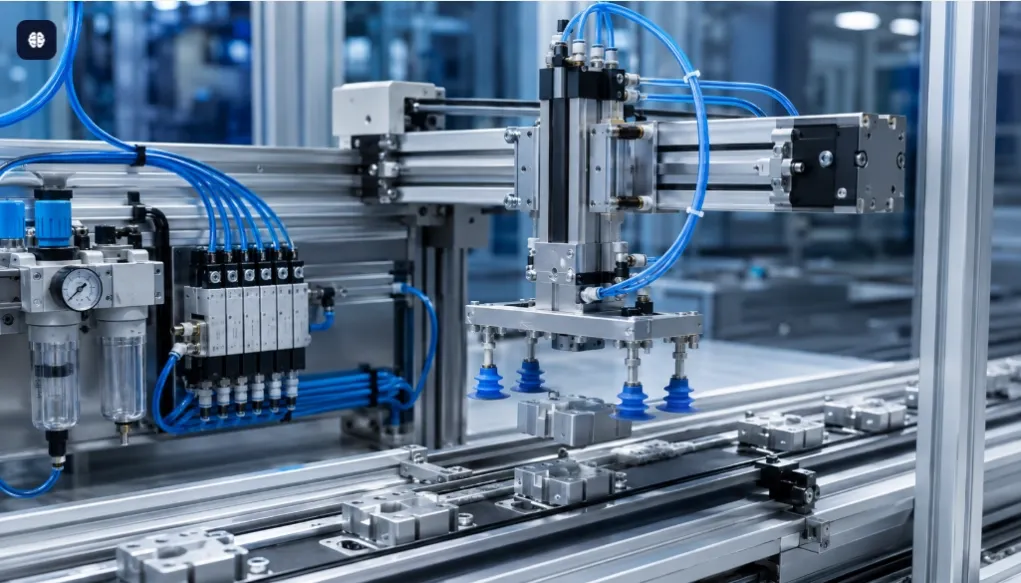
Pneumatic systems are widely used in textile machinery because they provide fast response, simple control, compact installation, and dependable operation. Components such as pneumatic cylinders, solenoid valves, air preparation units, fittings, tubing, and vacuum products help automate material positioning, tension control, clamping, cutting, cleaning, and packaging.
However, textile factories also present demanding operating conditions. Fibers, lint, dust, moisture, oil mist, vibration, and continuous production can shorten component life if the pneumatic system is not properly designed and maintained.
This article explains the main pneumatic applications in textile machinery, the most important component-selection factors, and practical ways to improve reliability while reducing air consumption and maintenance costs.
Major Pneumatic Applications in Textile Machinery
1. Yarn Tension and Positioning
Stable yarn tension is critical in spinning, winding, weaving, knitting, and other textile processes. Excessive tension may cause yarn breakage, while insufficient tension can affect fabric quality and machine productivity.
Compact pneumatic cylinders and precision pressure regulators can apply controlled force to tensioning mechanisms. Because cylinder force is related to air pressure, operators can adjust the system for different yarn types and production requirements.
Important components include:
- Compact pneumatic cylinders
- Mini cylinders
- Precision pressure regulators
- Flow control valves
- Pressure gauges
- Proximity sensors and magnetic switches
For sensitive yarn-handling applications, pressure stability and smooth cylinder movement are more important than maximum force.
2. Fabric Clamping and Holding
Fabric must often be held securely during cutting, sewing, printing, inspection, or packaging. Pneumatic clamps provide fast and repeatable holding force.
Depending on the machine design, manufacturers may use:
- Compact cylinders
- Thin profile cylinders
- Guided cylinders
- Swing clamps
- Pneumatic grippers
- Rodless cylinders
A guided cylinder is useful when the mechanism is exposed to side loads or when accurate alignment is required. A standard cylinder should not be used as a guide rail because excessive lateral force can damage the rod seal and bearing.
3. Material Feeding and Indexing
Pneumatic cylinders are commonly used to advance fabric, move guides, position rolls, and operate indexing mechanisms.
For consistent feeding, the system should include:
- A correctly sized cylinder
- A suitable 5/2-way or 5/3-way solenoid valve
- Meter-out speed controllers
- Stable regulated air pressure
- End-position sensors
- Mechanical guides that prevent side loading
Cylinder speed should be controlled using flow control valves rather than by simply reducing supply pressure. Very low pressure can cause unstable movement or failure to complete the stroke.
4. Cutting and Trimming
Textile machines use pneumatic cylinders to operate blades, cutters, thread trimmers, punching mechanisms, and edge-cutting devices.
These applications often require:
- Fast response
- Consistent operating force
- Precise end positions
- Reliable high-frequency cycling
- Suitable shock absorption
- Protection against fiber contamination
The cylinder must provide sufficient force after allowing for pressure loss and a reasonable safety factor. Oversizing the cylinder should also be avoided because a larger cylinder consumes more compressed air during every cycle.
5. Automatic Roll Changing
In winding, printing, laminating, and finishing equipment, pneumatic actuators can assist with roll clamping, shaft positioning, lifting, braking, and automatic roll replacement.
Large cylinders may be required for these operations. Guided or reinforced actuators should be considered where the load creates bending force or where precise alignment is important.
Pressure-holding and safety functions must be evaluated carefully. Compressed air alone should not be treated as a guaranteed safety-locking method for suspended loads.
6. Weaving Machine Control
Pneumatic components are used in weaving machines for functions such as:
- Yarn handling
- Fabric-edge control
- Clamping
- Cutter operation
- Nozzle control
- Cleaning
- Actuator positioning
- Machine safety mechanisms
High-speed weaving applications place demanding requirements on valves and tubing. Short response time, sufficient airflow, compact manifolds, and short tubing distances can improve cycle performance.
7. Dyeing and Finishing Equipment
Pneumatic actuators and process valves can control the movement of dampers, doors, chemical lines, steam systems, washing mechanisms, and fabric-guiding devices.
The environment may contain moisture, heat, chemicals, and corrosive substances. Standard pneumatic components may not be suitable for direct exposure to these conditions.
Manufacturers should consider:
- Corrosion-resistant cylinder materials
- Stainless steel piston rods
- Chemical-resistant seals
- Protected solenoid coils
- Suitable tubing materials
- Stainless steel or nickel-plated brass fittings
- Remote valve installation in a protected enclosure
Material compatibility must be confirmed for every chemical-processing application.
8. Textile Printing Machinery
Pneumatic systems can control printing heads, screens, doctor blades, fabric clamps, cleaning devices, and positioning mechanisms.
Printing quality depends on controlled pressure and repeatable movement. Precision regulators, low-friction cylinders, guided actuators, and stable flow control can help maintain consistent operation.
9. Garment and Fabric Packaging
At the final production stage, pneumatic systems are used to fold, push, clamp, seal, label, sort, and package finished textile products.
Common components include:
- Standard pneumatic cylinders
- Compact cylinders
- Rotary actuators
- Solenoid valves
- Vacuum ejectors
- Vacuum cups
- Air preparation units
- Push-in fittings
- PU tubing
Vacuum systems are especially useful for handling lightweight fabric, plastic bags, labels, cartons, and packaging materials.
10. Machine Cleaning and Fiber Removal
Compressed-air nozzles are sometimes used to remove loose fibers and dust. Although air blowing is effective, uncontrolled use can consume a large amount of energy and spread contamination throughout the factory.
Better solutions include:
- Efficient engineered air nozzles
- Pulsed air-blow systems
- Local extraction
- Solenoid-controlled air shutoff
- Pressure reduction
- Photoelectric or proximity-triggered blowing
Compressed air used for cleaning must comply with the factory’s safety requirements. Operators should never direct high-pressure air toward themselves or other people.
Essential Pneumatic Components for Textile Machinery
Pneumatic Cylinders
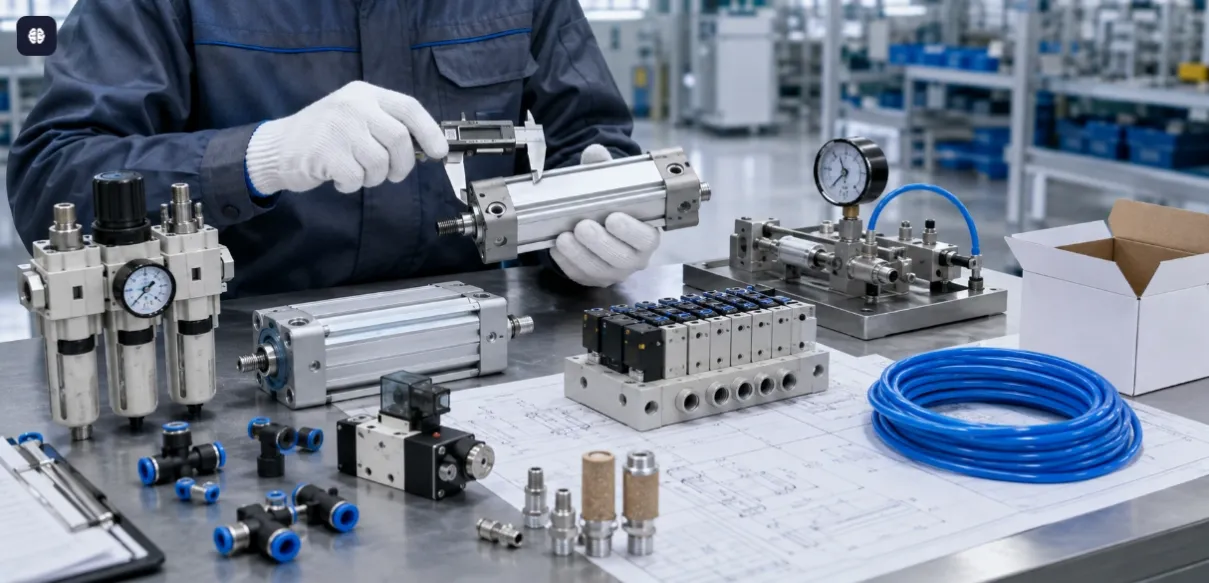
Pneumatic cylinders convert compressed-air energy into linear movement. Textile machinery may use standard, compact, mini, guided, rodless, rotary, or specialized cylinders.
Important selection factors include:
- Bore size
- Stroke length
- Required force
- Operating pressure
- Cycle frequency
- Available installation space
- Mounting method
- Side load
- Cushioning
- Sensor requirements
- Environmental conditions
The cylinder should be selected according to actual force and speed requirements rather than matching only the port size or external dimensions.
Solenoid Valves
Solenoid valves control the direction of compressed air and therefore control cylinder extension and retraction.
Frequently used valve configurations include:
- 3/2-way valves for single-acting cylinders
- 5/2-way single-solenoid valves
- 5/2-way double-solenoid valves
- 5/3-way valves with different center functions
- Compact valve manifolds
- Fieldbus-controlled valve terminals
A single-solenoid valve normally returns to its original position when electrical power is removed. A double-solenoid valve generally remains in its last switched position until the opposite coil is energized.
Valve flow capacity must match the cylinder volume and required operating speed. An undersized valve may cause slow or inconsistent cylinder movement.
Air Filter, Regulator, and Lubricator Units
An FRL unit prepares compressed air before it enters the machine.
The filter removes solid contamination and separates condensed water. The regulator maintains the required downstream pressure. The lubricator adds controlled oil mist when the downstream equipment requires lubrication.
Modern pre-lubricated cylinders and valves often operate without additional air-line lubrication. If lubrication is introduced, it may need to be maintained continuously. Always follow the requirements of the selected components.
Pneumatic Fittings
Push-in fittings provide fast tube installation and simplify maintenance. Textile machinery commonly uses straight fittings, elbow fittings, tee fittings, flow controls, bulkhead fittings, and reducers.
Quality fittings should provide:
- Reliable tube retention
- Low leakage
- Accurate threads
- Strong thread sections
- Durable release sleeves
- Compatible sealing materials
- Consistent performance across production batches
The thread standard must match the machine design. PT, NPT, and G threads are not automatically interchangeable.
Pneumatic Tubing
PU tubing is widely used because it is flexible, lightweight, and easy to install. Other materials may be required for high temperatures, chemical exposure, food contact, or special environmental conditions.
Tubing should be selected according to:
- Outside and inside diameter
- Working pressure
- Bending radius
- Ambient temperature
- Chemical compatibility
- Required airflow
- Movement frequency
- Color identification requirements
A tube with insufficient internal diameter can restrict airflow and reduce actuator speed.
Speed Controllers
Speed controllers regulate the airflow from pneumatic cylinders. Meter-out control is commonly used because it helps produce stable cylinder movement.
Speed controllers should be installed as close as practical to the cylinder ports. Long tube lengths between the cylinder and flow control can reduce responsiveness.
Silencers
Exhaust silencers reduce valve noise and help prevent contamination from entering exhaust ports. However, a clogged silencer can create back pressure and cause slow or irregular cylinder operation.
Silencers should therefore be inspected and replaced as part of preventive maintenance.
Sensors and Pressure Switches
Magnetic cylinder switches confirm piston position, while pressure and flow sensors monitor system performance.
Sensors can support:
- End-position detection
- Cycle counting
- Low-pressure alarms
- Vacuum confirmation
- Leakage monitoring
- Predictive maintenance
- Machine safety logic
Challenges in Textile-Factory Environments
Fiber and Dust Contamination
Lint and fine fibers can accumulate around cylinder rods, valve exhausts, sensors, and moving mechanisms. Contamination may damage seals, clog silencers, and interfere with sensor operation.
Recommended measures include:
- Installing effective air filters
- Using rod boots or scraper seals where necessary
- Keeping valves inside protected enclosures
- Cleaning equipment regularly
- Replacing clogged silencers
- Preventing open exhaust ports from drawing in contamination
Moisture in Compressed Air
Condensed water can corrode metal components, wash away lubrication, damage seals, and cause valve malfunction.
A suitable compressed-air system may include:
- Aftercoolers
- Water separators
- Air dryers
- Main-line filters
- Point-of-use FRL units
- Automatic drains
The required air quality depends on the machinery, operating environment, and textile process.
Continuous High-Speed Cycling
Repeated high-frequency motion increases wear on seals, guides, cushions, and valve spools.
To improve component life:
- Select valves with adequate flow capacity
- Avoid excessive cylinder speed
- Use appropriate cushioning
- Eliminate side loading
- Maintain correct alignment
- Control impact at the end of the stroke
- Use suitable lubricants and seal materials
- Replace wear parts before complete failure
Leakage and Energy Waste
Small leaks from fittings, tubing, seals, drains, and valve connections can become expensive when multiplied across an entire textile factory.
Common leakage points include:
- Damaged tubing ends
- Incorrectly inserted tubing
- Mismatched thread standards
- Loose fittings
- Worn cylinder seals
- Damaged valve seals
- Open manual drains
- Cracked polycarbonate bowls
- Poorly assembled manifolds
Routine ultrasonic leak inspections and prompt repairs can reduce operating costs significantly.
How to Improve Pneumatic-System Reliability
Use Clean and Dry Compressed Air
Contaminated air is one of the most common causes of valve and cylinder failure. Install suitable filtration and moisture-removal equipment, and maintain it according to actual operating conditions.
Select the Correct Component Size
Oversized components increase purchase cost and air consumption. Undersized components may create pressure loss, slow movement, and unreliable machine cycles.
Calculate cylinder force, air consumption, valve flow, tubing size, and peak system demand before finalizing the design.
Reduce Tubing Length
Long tubing increases air volume and delays actuator response. Installing valves closer to the cylinders can improve speed and reduce air consumption.
Valve manifolds are especially useful when several actuators are located in the same machine area.
Prevent Side Loading
Cylinder piston rods are designed primarily to transmit axial force. External guides should carry heavy or offset loads. Guided cylinders can be used when compact guidance is required.
Control Cylinder Speed
Excessive speed creates impact, vibration, noise, and premature seal wear. Use correctly sized flow controls and appropriate cushioning.
Maintain Stable Pressure
Operating the entire machine at unnecessarily high pressure wastes energy and increases mechanical stress. Use pressure zoning where different machine functions require different pressures.
Standardize High-Use Components
Machine builders can reduce maintenance complexity by standardizing common cylinder bores, valve sizes, tubing diameters, fitting threads, and coil voltages.
Standardization simplifies:
- Spare-parts management
- Technician training
- Purchasing
- Troubleshooting
- Emergency replacement
- Supplier evaluation
Reducing Compressed-Air Consumption
Compressed air is convenient, but it is also expensive to generate. Textile factories can reduce energy use through several practical measures.
Repair Leaks Promptly
Create a regular leak-detection program and record each leak until it is repaired. Pay particular attention to fittings, flexible tubing, cylinder rod seals, drains, and unused connections.
Reduce Operating Pressure
Cylinder force should meet the application requirement with a suitable safety margin, but excessive pressure provides little benefit. Lowering system or zone pressure can reduce both air consumption and leakage.
Use Correctly Sized Cylinders
A cylinder that is much larger than required consumes unnecessary air during every cycle. High-frequency machinery can produce significant savings when cylinders are sized correctly.
Shut Off Idle Zones
Use automatic shutoff valves to isolate compressed air from machines or production areas during long idle periods. Controlled restart functions can also help repressurize equipment safely.
Optimize Vacuum Generation
Vacuum ejectors should operate only when vacuum is required. Vacuum switches and air-saving circuits can stop compressed-air consumption after the required vacuum level is reached.
Replace Inefficient Air Blowing
Continuous open-pipe air blowing should be replaced with efficient nozzles, timed pulses, sensors, or mechanical alternatives wherever possible.
Preventive Maintenance Checklist
Daily or Shift Inspection
- Check the main air pressure.
- Inspect filter bowls for accumulated water.
- Confirm automatic drains are operating.
- Listen for obvious air leaks.
- Check lubricator oil levels where lubrication is required.
- Observe cylinder movement for abnormal vibration or impact.
Weekly Inspection
- Inspect tubing for cuts, abrasion, and sharp bends.
- Check push-in fittings for leakage.
- Clean external lint and fibers from components.
- Inspect silencers for contamination.
- Confirm sensor positions and cable security.
Monthly or Scheduled Inspection
- Conduct a complete leak survey.
- Check regulator accuracy.
- Inspect cylinder rods and seals.
- Examine mounting bolts and mechanical guides.
- Replace contaminated filter elements when necessary.
- Verify valve response and electrical connections.
- Record high-cycle component performance.
Maintenance intervals should be adjusted according to production hours, air quality, contamination, and equipment criticality.
Choosing a Pneumatic Supplier for Textile Machinery
A reliable supplier should provide more than a competitive unit price. Textile-machine manufacturers and distributors should evaluate:
- Product consistency
- Leakage control
- Seal quality
- Thread accuracy
- Material traceability
- Dimensional drawings
- CAD models
- Technical specifications
- Sample availability
- Production lead times
- Packaging quality
- Warranty response
- OEM and private-label capability
- Long-term spare-parts availability
For replacement projects, suppliers should also provide cross-reference assistance. Similar model numbers do not always guarantee identical mounting dimensions, ports, flow capacity, sensor grooves, or electrical connections.
Conclusion
Pneumatic systems remain an effective and economical automation solution for textile machinery. They provide fast movement, compact installation, simple control, and dependable operation across spinning, weaving, dyeing, finishing, printing, cutting, and packaging processes.
Reliable performance depends on correct component selection and system design. Clean compressed air, properly sized cylinders and valves, high-quality fittings, suitable tubing, stable pressure, controlled speed, and preventive maintenance all contribute to longer equipment life.
For textile-machine manufacturers, choosing pneumatic components based only on purchase price can create higher costs through leakage, downtime, inconsistent performance, and frequent replacement. A better approach is to evaluate total operating cost, technical compatibility, supplier reliability, and long-term availability.
With the right pneumatic solution, textile manufacturers can improve production stability, reduce maintenance requirements, control energy consumption, and achieve more reliable automation.